
Armando Laborde, singer

2020-04-07 - Armando Laborde

Last edition took a brief look at the professional career of Armando Laborde and this edition explores their legacy of recordings with D’Arienzo and Varela in more detail. That’s this Sunday on Tango Capital, 7:00pm to 8:00pm:

Image: Armando Laborde

PLAYLIST:

  • Magdala; recorded by Juan D’Arienzo on 26 December 1944; a tango with music composed by Rodolfo Biagi in 1944, lyrics by Francisco Gorrindo, and sung by Armando Laborde. The lyrics form a complicated metaphor of the loved woman, Magdala, as a saint, and his love as faith, with the added complication of the underpinning reference to the woman as a ‘magdalene’ and by extension as unfaithful.
  • Color Cielo, meaning ‘Colour Of The Sky’; recorded by Juan D’Arienzo on 26 December 1944; a tango with music composed by Antonio Bonavena, lyrics by Antonio Bonavena, and sung by Armando Laborde.
  • Pregonera, meaning ‘Herald’; recorded by Juan D’Arienzo on 28 August 1945; a tango with music composed by Alfredo De Angelis, lyrics by José Rótulo, and sung by Armando Laborde.
  • Me Grita El Corazón, meaning ‘My Heart Shrieks’; recorded by Juan D’Arienzo on 26 August 1945; a tango with music composed by Miguel Bonano & Mario Landi, lyrics by Roberto Miro, and sung by Armando Laborde.
  • Del Pasado, meaning ‘Out Of The Past’; recorded by Juan D’Arienzo on 24 December 1945; a milonga with music composed by Francisco Alfredo Marino, lyrics by Francisco Alfredo Marino, and sung by Armando Laborde and Alberto Echagüe.
  • El Viento Me Cuenta Cosas, meaning ‘The Breeze Tells Me Things’; recorded by Juan D’Arienzo on 17 December 1947; a milonga with music composed by Miguel Bucino, lyrics by Miguel Bucino, and sung by Armando Laborde and Alberto Echagüe.
  • Caña, meaning ‘Rod’; recorded by Juan D’Arienzo on 6 April 1949; a tango with music composed by Enrique Mónaco, lyrics by Julián Araujo & Enrique A Esviza, and sung by Armando Laborde.
  • Yuyo Brujo, meaning ‘Bewitching Drug’; recorded by Juan D’Arienzo on 11 April 1949; a tango with music composed by Benjamin García, lyrics by Carlos Waiss, and sung by Armando Laborde.
  • Aparcero, meaning ‘Sharefarmer’; recorded by Juan D’Arienzo on 17 April 1945; a tango with music composed by Anselmo A Aieta, first recorded in 1934, lyrics by Antonio Radicci, and sung by Armando Laborde and Alberto Echagüe.
  • Yo No Sé Llorar, meaning ‘I Don’t Know How To Weep’; recorded by Juan D’Arienzo on 6 December 1946; a tango with music composed by Joaquín Do Reyes in 1933, lyrics by Celadonio Flores, and sung by Armando Laborde and Alberto Echagüe.
  • Viejo Smoking, meaning ‘Old Man Smoking’; recorded by Juan D’Arienzo on 12 November 1952; a tango with music composed by Guillermo Barbieri in 1930, lyrics by Celadonio Flores, and sung by Armando Laborde.
  • Canzoneta; recorded by Juan D’Arienzo on 13 August 1954; a tango with music composed by Erma Suárez in 1951, lyrics by Enrique Lary, and sung by Armando Laborde. A canzoneta is a short composition of classical fugue structure, but in the poor area of Buenos Aires the singer, an old man now, is dreaming of home in Southern Italy and the Italian music that frames his lament. Like much European dance music, tango music is based on classical structures and uses repeating patterns such as ABAB, ABA, ABACA, that are derived from and shaped Baroque music and its descendent forms.
  • Tristeza Criolla, meaning ‘Argentine Sadness’; recorded by Juan D’Arienzo on 2 November 1954; a vals with music composed by Ignacio Corsini in 1910, lyrics by Julián De Charras, and sung by Armando Laborde.
  • Me Quieres Y Te Quiero, meaning ‘You Love Me And I Love You’; recorded by Juan D’Arienzo on 17 May 1956; a vals with music composed by Victorio Vergilito, lyrics by Antonio Cantó, and sung by Armando Laborde.
  • Farolito Viejo, meaning ‘Old Lantern’; recorded by Héctor Varela on 15 December 1950; a tango with music composed by Luis Teisseire in 1927, lyrics by José Eneas Riú, and sung by Armando Laborde.
  • Anoche A Las Dos, meaning ‘Last Night At Two’; recorded by Héctor Varela on 15 November 1951; a tango with music composed by Raúl Joaquín de los Hoyos in 1926, lyrics by Roberto Lino Cayol, and sung by Armando Laborde.
  • Un Bailongo, meaning ‘A Dance’; recorded by Héctor Varela on 4 December 1950; a milonga with music composed by Carlos Gardel & José Razzano, first recorded in 1922, lyrics by Carlos Gardel & José Razzano, and sung by Armando Laborde and Rodolfo Lesica.
  • La Carreta, meaning ‘The Road’; recorded by Héctor Varela on 15 November 1951; a tango with music composed by José Servidio & Luis Servidio in 1927, lyrics by Francisco García Jiménez, and sung by Armando Laborde and Rodolfo Lesica.
  • Patio Porteña, meaning ‘Courtyard Of A Buenos Aires House’; recorded by Héctor Varela on 3 January 1952; a vals with music composed by Alfonso Lacueva & Julio Nistal, lyrics by Alfonso Lacueva & Julio Nistal, and sung by Armando Laborde and Rodolfo Lesica.
 

Orquesta La Luna

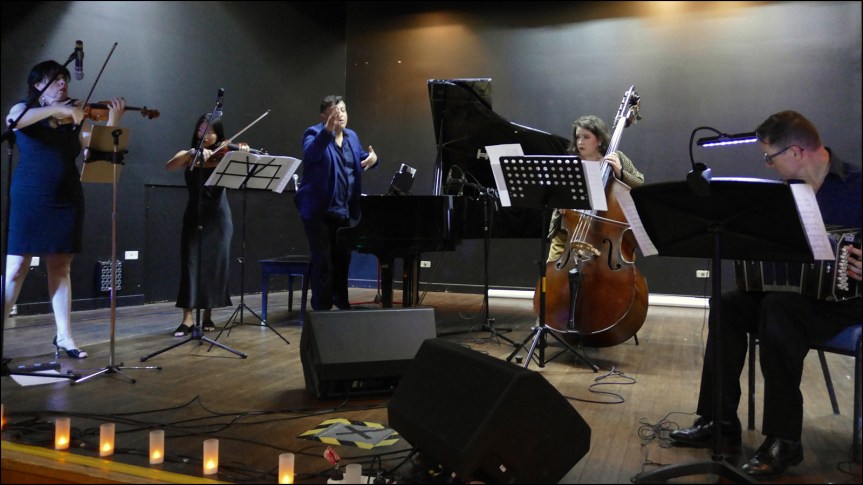
2020-04-05 - Orquesta La Luna en milonga at the Bexley Club in Sydney on 30 March 2019

With social dancing behind us for a while, this edition holds a memory of dancing on the parquet floor of the Bexley Club in Sydney with Orquesta La Luna. The singing of Armando Laborde features, and there is a brief round-up of some virtual tango events. That’s this Sunday on Tango Capital, 7:00pm to 8:00pm:

Image Credit: Ann Smith.  Leading from the piano, Daniel Rojas’s glissando takes him right off the end of the keyboard! That’s Orquesta La Luna playing the Sydney milonga at Bexley Club on 30 March 2019.

VIRTUAL TANGO EVENTS:

Wednesdays, 20:30 – 22:00 AEST: Live practica via Zoom with Canberra’s Tengo Tango: https://www.facebook.com/events/232259821462740/

Sunday 5 April, 19:30-20:30 AEST: Live alternative DJ set with Melbourne’s Belinda Stopar on Neotango TV: https://www.facebook.com/events/698916027594757/

PLAYLIST:

  • Catamarca; recorded by Julio De Caro on 5 April 1940; a tango with music composed by Eduardo Arolas and lyrics by Jesús Fernández Blanco. The name is a reference to the Western province of that name in Argentina.
  • Desde Aquella Noche, meaning ‘From This Night’; recorded by Juan D’Arienzo on 26 August 1946; a tango with music composed by Fulvio Salamanca, lyrics by Carlos Bahr, and sung by Armando Laborde.
  • Milonga Que Peina Canas, meaning ‘Milonga Of The Greying Hair’; recorded by Juan D’Arienzo on 13 August 1952; a milonga with music composed by Alberto Gómez in 1942, lyrics by Alberto Gómez, and sung by Armando Laborde.
  • Magdala; recorded by Juan D’Arienzo on 26 December 1944; a tango with music composed by Rodolfo Biago in 1944, lyrics by Francisco Gorrindo, and sung by Armando Laborde.
  • Yuyo Brujo, from lunfardo, meaning ‘Bewitching Drug’; recorded by Héctor Varela on 28 May 1951; a tango with music composed by Benjamín García, first recorded in 1949, lyrics by Carlos Waiss, and sung by Armando Laborde.
  • La Sonrisa De Mamá, meaning ‘The Mother’s Smile’; recorded by Juan D’Arienzo on 1 September 1954; a vals with music composed by Carlos Bahr, Juan D’Arienzo, Fulvio Salamanca, lyrics by Carlos Bahr, Juan D’Arienzo, Fulvio Salamanca, and sung by Armando Laborde.
  • El Ingeniero, meaning ‘The Engineer’; recorded live from a performance by Orquesta La Luna at Bexley Club, Sydney on 30 March 2019; a tango with music composed by Alejandro Junnissi, first recorded in 1945.
  • Milonga De Mis Amores, meaning ‘Milonga Of My Loves’; recorded live from a performance by Orquesta La Luna at Bexley Club, Sydney on 30 March 2019; a milonga with music composed by Pedro Laurenz in 1937 and lyrics by José María Contursi.
  • La Yumba; recorded live from a performance by Orquesta La Luna at Bexley Club, Sydney on 30 March 2019; a tango with music composed by Osvaldo Pugliese, first recorded in 1946. The name is a reference to the deep notes of tango, and of the sounds of industry and commerce as heard in the streets of Buenos Aires.
  • Michelangelo ’70; recorded live from a performance by Orquesta La Luna at Bexley Club, Sydney on 30 March 2019; a tango nuevo with music composed by Astor Piazzolla in 1969.
  • El Purrete, from lunfardo, meaning ‘The Young Child’; recorded by Juan D’Arienzo on 18 September 1953; a tango with music composed by Eladio Blanco, lyrics by Raúl Hormaza, and sung by Armando Laborde.


An evening of vals

2020-03-25 - The Mandelbrot vals

With tango events cancelled for the foreseeable future, this week brings you another opportunity to dance at home. This week it’s an invitation to practice your vals skills. That’s this Sunday on Tango Capital, 7:00pm to 8:00pm:

Image: Ann Smith – The Mandelbrot vals.

PLAYLIST:

2020-03-29 - Playlist

Tango For Dancing

2020-03-18 - TFD - BWR 3

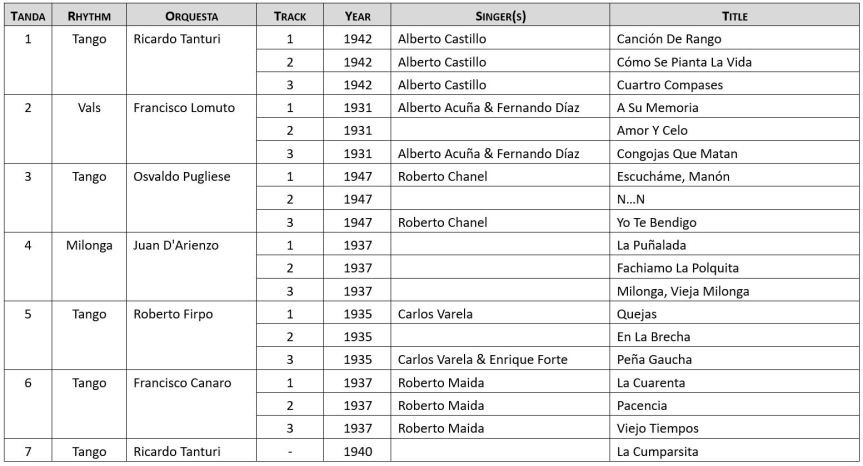
Put the COVID-19 outbreak behind you this Sunday, and dance with your partner on the kitchen floor as Tango Capital returns to play the fourth Sunday of the month broadcasting a milonguita playlist for dancers, whereever they are. That’s this Sunday on Tango Capital, 7:00pm to 8:00pm:

PLAYLIST:

2020-03-22 - Playlist


Yuko Kinoshia, DJ

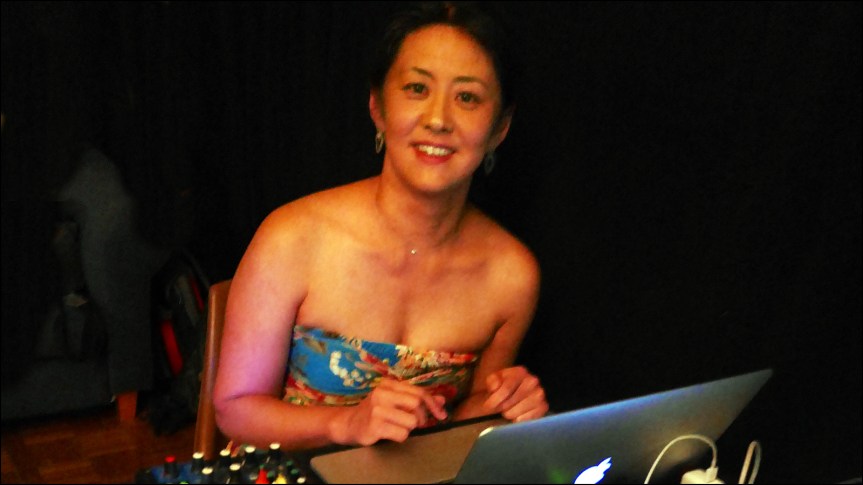
2020-03-12 - Yuko Kinoshita DJing at El Boliche on 21 Jan 2019

Yuko Kinoshita shares her experiences of DJing traditional tango music for milongas around Australia. That’s this Sunday on Tango Capital, 7:00pm to 8:00pm:

Image Credit: Ann Smith; Yuko Kinoshita DJing at El Boliche Polaco milonga on 21 January 2019.

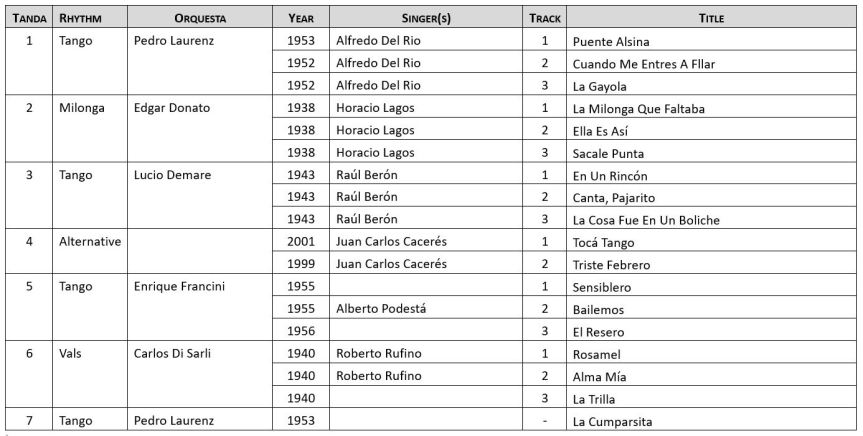
PLAYLIST:

  • Tus Labios Me Dirán, meaning ‘Your Lips Will Tell Me’; recorded by Rodolfo Biagi on 15 October 1945; a tango with music composed by Emilio Brameri, lyrics by Héctor Marcó, and sung by Alberto Amor.
  • Se Fue, meaning ‘He Went’; recorded by Lucio Demare on 13 October 1943; a vals with music composed by Horacio Salgán in 1943, lyrics by Oscar Rubens, and sung by Raúl Berón.
  • Mala Junta, meaning ‘Bad Company’; recorded by Julio De Caro on 16 November 1938; a tango with music composed by Julio De Caro & Pedro Laurenz in 1927 and lyrics by Juan Miguel Velich.
  • Pena Mulata, meaning ‘Grief Of The Afro-Argentine Woman’; recorded by Carlos Di Sarli on 28 February 1941; a milonga with music composed by Sebastián Piana in 1941, lyrics by Homero Manzi, and sung by Roberto Rufino.
  • Si Soy Así, meaning ‘Yes, I’m Like That’; recorded by Francisco Lomuto on 14 June 1933; a tango with music composed by Francisco Lomuto in 1933, lyrics by Antonio Botta, and sung by Fernando Díaz.
  • Consejo De Oro, meaning ‘Golden Advice’; recorded by Osvaldo Pugliese on 27 February 1946; a tango with music composed by Arquímedes Arci, first recorded in 1933, lyrics by Arquímedes Arci, and sung by Roberto Chanel.
  • Escucháme Manón, meaning ‘Listen To Me’, and also known as ‘Indiferencia’; recorded by Osvaldo Pugliese on 10 June 1947; a tango with music composed by Francisco Pracánico, lyrics by Roberto Chanel & Claudio Frollo, and sung by Roberto Chanel.
  • Rondando Tu Esquina, meaning ‘Hanging Around Your Corner’; recorded by Osvaldo Pugliese on 18 July 1945; a tango with music composed by Charlo, lyrics by Enrique Cadícámo, and sung by Roberto Chanel.
  • Fuimos, meaning ‘We Were’; recorded by Osvaldo Pugliese on 28 March 1946; a tango with music composed by José Dames, first recorded in 1945, lyrics by Homero Manzi, and sung by Roberto Chanel.


Carlos Dante – singer

2020-03-06 -Carlos Dante

Last edition took a brief look at the professional life of Carlos Dante, and this edition explores their legacy of compositions and recordings with Caló, the Canaros Francisco and Rafael, and of course with De Angelis.. That’s this Sunday on Tango Capital, 7:00pm to 8:00pm:

Image Credit: https://www.todotango.com/english/artists/info/179/Carlos-Dante

PLAYLIST:

  • Mamá Yo Quiero Un Novio, meaning ‘Mama, I Want A Boyfriend’; recorded by Rafael Canaro in 1929; a tango with music composed by Ramón Collazo in 1928, lyrics by Roberto Fontaina, and sung by Carlos Dante and Rafael Canaro.
  • TBC, and also known as ‘Te Bese’; recorded by Rafael Canaro in 1929; a tango with music composed by Edgardo Donato in 1928, lyrics by Roberto Fontaina & Víctor Soliño, and sung by Carlos Dante and Rafael Canaro.
  • Ya No Cantas, Chingolo, meaning ‘You Don’t Sing Anymore, Little Bird’; recorded by Rafael Canaro in 1929; a tango with music composed by Antonio Scatasso in 1928, lyrics by Edmundo Bianchi, and sung by Carlos Dante and Rafael Canaro. The name is a reference to a small reddish-brown bird of the pampa as a symbol of the pampa lifestyle.
  • Como Palo ‘e Gallinero; recorded by Francisco Canaro on 24 November 1932; a ranchera with music composed by Rafael Rossi, lyrics by Francisco Brancatti, and sung by Carlos Dante and Ángel Ramos.
  • Quien Tuviera 20 Abriles, meaning ‘Who Is 20 Years Old?’; recorded by Francisco Canaro on 24 November 1932; a tango sung by Carlos Dante.
  • Recuerdos Del Pasado, meaning ‘Memories Of The Past’; recorded by Francisco Canaro on 24 November 1932; a tango with music composed by Enrique Delfino, lyrics by Enrique Delfino, and sung by Carlos Dante.
  • Serenata Criolla, meaning ‘Creole Serenade’; recorded by Francisco Canaro on 24 November 1932; a ranchera with music composed by Antonio Molina, and sung by Carlos Dante and Ángel Ramos.
  • No Vale La Pena, meaning ‘Not Worth It’; recorded by Miguel Caló on 5 October 1934; a tango with music composed by Antonio Helú, lyrics by Antonio Helú, and sung by Carlos Dante.
  • Alma Mía, meaning ‘My Soul’; recorded by Miguel Caló on 17 December 1935; a tango with music composed by Domingo Cuestas, lyrics by Mario Gomila, and sung by Carlos Dante and Hermanas Morel.
  • Caballo De Calesita, meaning ‘Merry-Go-Round Horse’; recorded by Miguel Caló on 14 March 1936; a tango with music composed by Miguel Nijensohn & Pedro Pandolfi, lyrics by Carlos Marín, and sung by Carlos Dante.
  • Patrona, meaning ‘Patron Saint’; recorded by Alfredo De Angelis on 29 May 1951; a milonga with music composed by Juan Larenza, lyrics by Cátulo Castillo, and sung by Carlos Dante.
  • Esta Noche Me Despido, meaning ‘Tonight I Say Good-bye’; recorded by Alfredo De Angelis on 12 May 1949; a tango with music composed by Carlos Dante, lyrics by José Rótulo, and sung by Carlos Dante.
  • Por Eso Te Quiero, meaning ‘That’s Why I Love You’; recorded by Alfredo De Angelis on 18 December 1953; a tango with music composed by Carlos Dante, lyrics by Reinaldo Yiso, and sung by Carlos Dante.
  • Tu Pollera Azul, meaning ‘Your Blue Skirt’; a tango with music composed by Carlos Dante & Victor Braña & Reinaldo Yiso, lyrics by Carlos Dante & Victor Braña & Reinaldo Yiso, and sung by Carlos Dante.
  • El Retrato De Los Viejos, meaning ‘The Portrait Of The Old Folk’; recorded by Alfredo De Angelis on 29 October 1956; a tango with music composed by Carlos Dante, lyrics by Jesús Otero, and sung by Oscar Larocca.
  • A Magaldi, meaning ‘To Magaldi’; recorded by Alfredo De Angelis on 21 October 1947; a vals with music composed by Carlos Dante & Pedro Noda, lyrics by Juan Bernardo Tiggi, and sung by Carlos Dante and Julio Martel. The title is a reference to the death of Agustín Magaldi, singer, and composer who died in 1938.
  • Selección De Valses, meaning ‘Selection Of Waltzes’; recorded by Francini-Pontier on 4 December 1953; a vals with music composed by Carlos Dante & Francisco Canaro, first recorded in 1952 and lyrics by Ivo Pelay & Juan Bernardo Tiggi. The valses making up this medley are Una Lágrima, A Mi Madre, Desde el Alma, Palomita Blanca, Amor y Cielo, and Un Placer.
  • Primer Beso, meaning ‘First Kiss’; recorded by Francini-Pontier on 4 February 1948; a vals with music composed by Carlos Dante & Pedro Noda, lyrics by Héctor Gagliardi, and sung by Raúl Berón and Roberto Rufino.


Tango Enigmático


2020-02-26 - Tango Enigmatico BNE 5 May 2019

There’s a report on Tango Enigmático‘s second outing, we check out What’s On for tango around the region, and the singer Carlos Dante features.   That’s this Sunday on Tango Capital, 7:00pm to 8:00pm:

Image Credit:  Ann Smith. Tango Enigmático bringing the new and the old together last year; they were joined by Tango Paradiso singer Marina Varney at The Glasshouse, Brisbane, on 5 May 2019. Check out a preview here.

PLAYLIST:

  • El Criollito Oriental, meaning ‘Kid From Uruguay’; recorded by Pedro Laurenz on 1 March 1944; a milonga with music composed by Alberto Mastra, lyrics by Alberto Mastra, and sung by Alberto Podestá. Uruguay was the most eastern of the provinces of the Spanish Empire in South America and its official name is the Oriental Republic of Uruguay. The title of the song more accurately translates as ‘The Young Man Of Uruguay’.
  • Mocosita, meaning ‘Young Girl’; recorded by Alfredo De Angelis on 20 April 1949; a tango with music composed by Gerardo Matos Rodríguez in 1926, lyrics by Victor Soliño, and sung by Carlos Dante. Meaning ‘brat’, the title is a term of endearment for a young girl, although it all ends badly for the payador who loves her.
  • Engominado, meaning ‘Pimped’; recorded by Juan D’Arienzo in 1928; a tango with music composed by Fernando Montoni, first recorded in 1928, lyrics by Maximo José Orsi, and sung by Carlos Dante. Literally meaning ‘Gummed’, in reference to the brilliantine hair pomade worn by young men in the early part of the 20th century; ‘Pimped’ is more meaningful in the 21st century.
  • El Carrerito, meaning ‘The Carter’; recorded by Rafael Canaro in 1929; a tango with music composed by Raúl Joaquín De Los Hoyos in 1928, lyrics by Alberto Vacarezza, and sung by Carlos Dante.
  • Soñar Y Nada Más, meaning ‘To Dream And Nothing More’; recorded by Alfredo De Angelis on 29 August 1944; a vals with music composed by Francisco Canaro, first recorded in 1943, lyrics by Ivo Pelay, and sung by Carlos Dante and Julio Martel.
  • Soy Un Arlequin, meaning ‘I Am A Harlequin’; recorded by Alfredo De Angelis on 11 September 1945; a tango with music composed by Enrique Santos Discépolo in 1928, lyrics by Enrique Santos Discépolo, and sung by Carlos Dante.
  • Immensidad, meaning ‘Immensity’; recorded live from a performance by Tango Enigmático at The Glasshouse, Brisbane on 5 May 2019; a concierto with music composed by Exequiel Mantega.
  • Hecho Por Mano, meaning ‘Made By Hand’; recorded live from a performance by Tango Enigmático at The Glasshouse, Brisbane on 5 May 2019; a concierto written in rural Victoria and urban Buenos Aires by Australian composer Owen Salome.
  • La Puñalada, meaning ‘The Knife-stabbing’; recorded live from a performance by Tango Enigmático at The Glasshouse, Brisbane on 5 May 2019; a milonga with music composed by Pintín Castellanos in 1933 and lyrics by Celadonio Flores
  •  A Evaristo Carriego; recorded live from a performance by Tango Enigmático at The Glasshouse, Brisbane on 5 May 2019; a concierto with music composed by Eduardo Rovira, first recorded in 1969. The name is a reference to Evaristo Carriego, the nationalist Argentine poet who also influenced tango lyrics.


Carlos Acuña

2020-02-13 - Carlos Acuna

Think tango singer and the conversational canción of Carlos Gardel or of Roberto Goyeneche may come to mind and of course the majority of female singers performed this genre. Or perhaps it was the tango bailable of Alberto Podestá or Alberto Castillo that came to mind. While the majority of tango singers specialised in one or other genre, Carlos Acuña was comfortable working in both. Last edition took a brief look at his life and this edition explores their recording legacy in more detail. That’s this Sunday on Tango Capital, 7:00pm to 8:00pm:

Image Credit: http://humilitan.blogspot.com/search/label/Carlos%20Acu%C3%B1a

PLAYLIST:

  • Cuando El Amor Muere, meaning ‘When Love Dies’, and also known as ‘When Love Dies’; recorded by Carlos Di Sarli on 2 August 1941; a tango with music composed by Alfredo Malerba in 1941, lyrics by Héctor Marcó, and sung by Carlos Acuña.
  • Adiós Te Vas, meaning ‘Goodbye’, and also known as ‘Goodbye’; recorded by Rodolfo Biagi on 24 August 1943; a tango with music composed by Egidio Pittaluga, lyrics by Cátulo Castillo, and sung by Carlos Acuña.
  • Barrio Reo, from lunfardo, meaning ‘Humble Neighbourhood’, and also known as ‘Humble Neighbourhood’; recorded by Rodolfo Biagi on 29 April 1943; a tango with music composed by Roberto Fugazot in 1927, lyrics by Alfredo Navarrine, and sung by Carlos Acuña. The name is a reference to the suburb or neighbourhood in which the singer grew up.
  • Canción De Rango, meaning ‘Song Of The Range’, and also known as ‘Pa’ Que Se Callen’; recorded by Rodolfo Biagi on 29 April 1943; a tango with music composed by Raúl Kaplún, first recorded in 1942, lyrics by José María Suñe, and sung by Carlos Acuña.
  • Soy Del Noventa , meaning ‘I Am Of The 90s’, and also known as ‘Soy Del 90’; recorded by Rodolfo Biagi on 8 July 1943; a milonga with music composed by Tito Ribero, lyrics by Carlos Waiss, and sung by Carlos Acuña.
  • Lonjazos , from lunfardo; recorded by Rodolfo Biagi on 7 December 1943; a tango with music composed by Andrés Domenech in 1932, lyrics by Jesús Fernández Blanco, and sung by Carlos Acuña.
  • Yo Tengo Un Puñal, meaning ‘I Have A Knife’; recorded by Rodolfo Biagi on 3 March 1943; a tango with music composed by Luís Moresco, lyrics by José Demetrio Terragno, and sung by Carlos Acuña.
  • Sosiego En La Noche, meaning ‘Peace In The Night’; recorded by Rodolfo Biagi on 30 May 1944; a tango with music composed by Roverto Garza in 1943, lyrics by Carlos Bahr, and sung by Carlos Acuña.
  • A Suerte Y Verdad, meaning ‘To Luck And Truth’; recorded by Rodolfo Biagi on 11 August 1944; a tango with music composed by Carlos M Parodi, lyrics by Carlos Waiss, and sung by Carlos Acuña.
  • Tu Voz, meaning ‘Your Voice’; recorded by Rodolfo Biagi on 9 May 1944; a tango with music composed by Juan Antonio Migliore, lyrics by Fermin Carballeda, and sung by Carlos Acuña.
  • Sueño De Juventud, meaning ‘Dreams Of Youth’; recorded by Rodolfo Biagi on 11 April 1944; a vals with music composed by Enrique Santos Discépolo in 1931, lyrics by Enrique Santos Discépolo, and sung by Carlos Acuña.
  • Cada Vez Que Mi Recuerdes, meaning ‘Every Time You Remember’; recorded by Mariano Mores on 8 April 1957; a tango with music composed by Mariano Mores , first recorded in 1943, lyrics by José María Contursi, and sung by Carlos Acuña.
  • Lejana Tierra Mía, meaning ‘My Land Afar’; recorded by Mariano Mores on 16 January 1960; a tango with music composed by Carlos Gardel, first recorded in 1935, lyrics by Alfredo Le Pera, and sung by Carlos Acuña.
  • La Canción, meaning ‘The Song’, and also known as ‘Flor de mburucuyá’; recorded by Mariano Mores on 16 January 1960; a tango with music composed by Juan de Dios Filiberto, first recorded in 1959, lyrics by Lito Bayardo, and sung by Carlos Acuña.
  • Mulatada; recorded by Mariano Mores on 11 August 1958; a candombe with music composed by Mariano Mores , lyrics by Cátulo Castillo, and sung by Carlos Acuña and Aldo Campoamor. The name is a reference to Afro-Argentine music.
  • La Flor De Canela, meaning ‘Cinnamon Flower’; recorded by Mariano Mores on 11 August 1958; a vals with music composed by Isabel Granda, first recorded in 1957, lyrics by Isabel Granda, and sung by Carlos Acuña and Aldo Campoamor.
  • El Día Que Me Quieras, meaning ‘The Day That You Love Me’; recorded by Mariano Mores on 20 January 1970; a tango with music composed by Carlos Gardel in 1935, lyrics by Alfredo Le Pera, and sung by Carlos Acuña.
  • Mi Buenos Aires Querido, meaning ‘My Beloved Buenos Aires’;; a tango with music composed by Carlos Gardel in 1934, lyrics by Alfredo Le Pera, and sung by Carlos Acuña.   Acuña recorded this song as early as 1962, but not with Mariano Mores orquesta. Given the orchestral backing this version may be recorded by Martin Darré and his orchestra in Spain some time in the 1970s or 1980s.

Melbourne Tango Orquesta

2020-02-07 - MTO in concert at the Paris Cat, Melbourne, on 1 February 2020

Marking a new milestone in the emergence of tango music here, Australia’s first permanent tango orquesta started performing in 2018, and this edition includes a report on the Melbourne Tango Orquesta kicking off 2020 at the Paris Cat. The singing of Carlos Acuña features, and there’s a round-up of What’s On. It’s all on here, this Sunday, on Tango Capital, 7:00pm to 8:00pm:

Image Credit: Ann Smith; The Melbourne Tango Orquesta on stage at the Paris Cat, Melbourne, on 1 February 2020.

Once upon a time in Australia there were ensembles called ‘tango bands’. They generally included musicians from Italy, perhaps Spain, and they played dance music of many styles—except Argentine Tango. It was the 1940s, the 1950s, and in an Australia still under the White Australia policy, ‘tango band’ was pejorative; in an Anglophile culture the term simply separated the Australian musicians from the immigrants. Fast-forward to the 21st century, to an Australia that includes immigrants from every other country in the world*, and the musical influences on young musicians are reflecting that diversity. Tango music is developing through a healthy interchange of musicians between ensembles in the Eastern mainland states, and the emergence of the Melbourne Tango Orquesta marks the growing maturity of the tango genre in Australia.

The development of tango music in Australia mirrors some aspects of the development of tango in Argentina a century earlier. At first the ensembles were small; in Argentina initially there were only 3 or 4 musicians, but the sextet was established by 1911. A century later in Australia the early ensembles were similarly small. The ‘Tango 22’ CD release recorded tango bailable from a duo in Perth in 2001, and Cambalache was a Sydney-based duo a decade later; Libertango Trio was Sydney-based, as were the quartets Tangocentric and Tango Bar, and there was an electro/dub tango quartet in Melbourne; the quintet Collectivo 29 formed in Melbourne, Fuego Blanco and Tángalo formed quintets in Sydney; while Tango Paradiso from Queensland varied up to a sextet formation and Los Jovenes Del Tango was a Canberra-based sextet.

But during the Golden Age orquestas emerged with 10 to 20 musicians, and for dancing tango nothing beats the dynamic range that is only possible with an orquesta. In Australia three orquestas have emerged. The earliest is Tango Oz but while it has been developing tango musicians through an orquesta formation since 2009, it is primarily a youth teaching orquesta with constant turnover of young musicians and only sporadic public performances. Sadly, drawing these musicians into tango as they mature is rare, and the first professional orquesta performance in Australia was by the 10-piece Australian Tango Festival Orquesta in 2017. This was a one-off configuration drawing on musicians from Tángalo, Mendoza Tango Quartet, and the mis-named Orquesta La Luna (it’s actually a sextet 🙂 ), and it featured Australia’s first ever front-line of four bandoneóns. Today the 12-piece Melbourne Tango Orquesta similarly draws on musicians from smaller Melbourne-based ensembles, including La Busca and Tango Collusion Trio, but provides an ongoing context for these musicians to integrate and refine their interpretation of classic tango for dancing. The Melbourne Tango Orquesta is the first permanent tango ensemble bringing the emotional depth of an orquesta to Australian dancers on an ongoing basis.

As well the Melbourne Tango Orquesta brings Australia its first cantor del orquesta, Juan Veron de Astrada. He is a great front-man, one of the best, drawing in the audience with laughter and insights into the lyrics he sings. He is opera-trained in Argentina, but now channels the smooth conversational voice of his idol, Carlos Gardel. He is also a tango dancer, and he brings the richness of the Golden Age cantor to complement the Orquesta’s repertoire, his voice seamlessly transitioning from the joy of a vals to a crisp milonga.

Both classically trained and folk musicians in Australia are now becoming interested in tango music and what its musical forms, structures, and techniques can offer, and they bring a high level of individual skill and professionalism to tango. It must also be said that the tight co-ordination of a traditional orquesta típica from the Golden Age is something that can only be developed over time as the musicians work together regularly in a larger configuration. It will be exciting to watch and hear the Melbourne Tango Orquesta mature in this way over time. But this is only a matter of time; there is no doubting the tightness and excitement of its electrifying interpretations of classic Pugliese tangos.

The Melbourne Tango Orquesta is bringing back the big sound of tango, although think Lomuto for instrumentation rather than Di Sarli. The frontline of multiple bandoneóns, the string of violins, piano, and occasionally multiple double basses; these all fits the mould of the classic orquesta. However, the Melbourne Tango Orquesta also incorporates clarinet and guitars. Clarinet was a textual element of several major orquestas, including Canaro and Fresedo as well as Lomuto, but not a common instrument. Guitar was the key instrument of the very early development of tango in the mid-19th century until it was eliminated by Firpo in 1914. For the Melbourne Tango Orquesta the piano channels Firpo’s vision, driving the rhythm and the underlying texture, the bandoneóns and violins bringing a tapestry of depth and delicacy. But unlike many contemporary orquestas overseas the musicians and arrangers of the Melbourne Tango Orquesta have also taken on the challenge of integrating the very different textures of clarinet and guitar to enrich its repertoire of classic tango. Together with the influences of their folk music experience, the result refines and extends the arrangements of Di Sarli, Canaro, Troilo, and their peers that form the core of the Orquesta’s repertoire, bringing new textures to the evolution of contemporary tango music.

*Australian Bureau of Statistics Release 3412.0 – Migration, Australia, 2017-18

PLAYLIST:

  • Milonga Sentimental, meaning ‘Sentimental Milonga’; recorded by Francisco Canaro on 9 February 1933; a milonga with music composed by Sebastián Piana in 1932, lyrics by Homero Manzi, and sung by Ernesto Famá and Ángel Ramos.
  • Uno, meaning ‘One’; recorded by Rodolfo Biagi on 11 April 1944; a tango with music composed by Mariano Mores in 1943, lyrics by Enrique Santos Discépolo, and sung by Carlos Acuña.
  • Cuando El Amor Muere, meaning ‘When Love Dies’; recorded by Carlos Di Sarli on 2 August 1941; a tango with music composed by Alfredo Malerba in 1941, lyrics by Héctor Marcó, and sung by Carlos Acuña.
  • A La Luz Del Candil, meaning ‘By The Light Of The Candle’, and also known as ‘A La Luz De Un Candil’; recorded by Rodolfo Biagi on 3 March 1943; a tango with music composed by Carlos Vicente Geroni Flores in 1927, lyrics by Julio Plácido Navarrine, and sung by Carlos Acuña.
  • Adiós, Pampa Mía, meaning ‘Farewell, My Pampa’; recorded by Mariano Mores on 22 March 1957; a tango with music composed by Francisco Canaro, Mariano Mores, Ivo Pelay in 1945, lyrics by Francisco Canaro, Mariano Mores, Ivo Pelay, and sung by Carlos Acuña.
  • Un Boliche, from lunfardo, meaning ‘A Bar’, and also known as ‘Ni Mas Ni Menos’;; a tango with music composed by Carlos Acuña, first recorded in 1958, lyrics by Tito Cabano, and sung by Carlos Acuña. Possibly recorded in the 1970s or 1980s.
  • Loca, meaning ‘Floozy’; recorded live from a performance by Melbourne Tango Orquesta at Paris Cat, Melbourne on 1 February 2020; a tango with music composed by Manuel Jovés in 1922 and lyrics by Antonio Viergol.
  • Organito De La Tarde, meaning ‘Hurdy-Gurdy In The Evening’; recorded live from a performance by Melbourne Tango Orquesta at Paris Cat, Melbourne on 1 February 2020; a tango with music composed by Cátulo Castillo in 1923 and lyrics by José González Castillo (Juan de León).
  • La Mariposa, meaning ‘The Butterfly’; recorded live from a performance by Melbourne Tango Orquesta at Paris Cat, Melbourne on 1 February 2020; a tango with music composed by Pedro Maffia in 1921 and lyrics by Celedonio Flores.
  • La Puñalada, meaning ‘The Stabbing’; recorded live from a performance by Melbourne Tango Orquesta at Paris Cat, Melbourne on 1 February 2020; a milonga with music composed by Pintín Castellanos in 1933 and lyrics by Celedonio Flores.