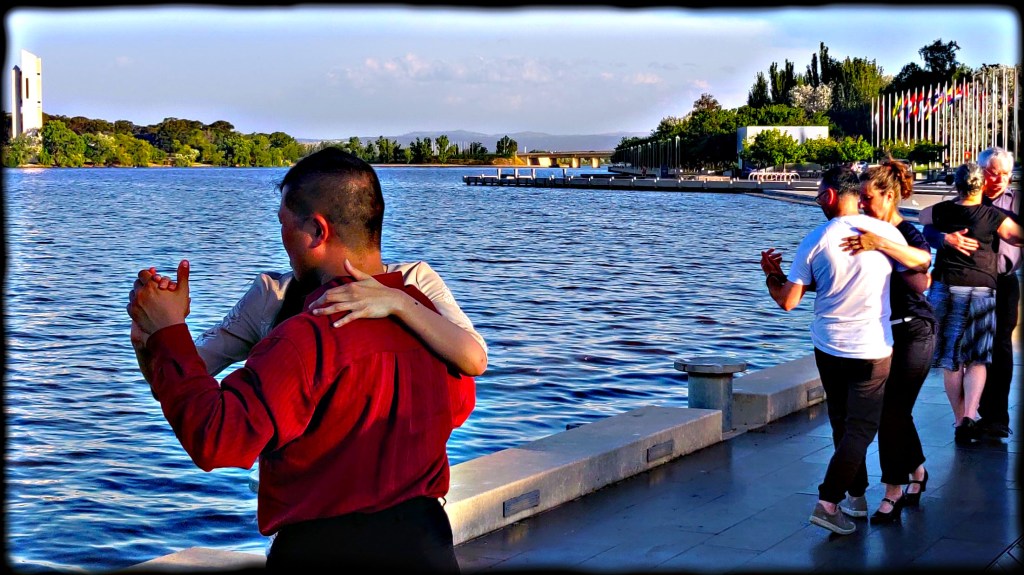
Tomorrow will be cloudy, cooler, and clearing – so perfect for dancing. Tango Capital By The Lake is Covid-19-safe tango in the Tango Capital, every Tuesday throughout the summer.
DAY: Tuesdays, from 1 December to the end of February. TIME: 5:30pm-7:30pm (unless actually raining). WHERE: Queen Elizabeth Terrace, Parkes.In front of the Reconciliation Monument on the south bank of Lake Burley Griffin, near the Waterfront Restaurant, Parliamentary Triangle, Canberra. COVID-19 SAFETY: 1. Bring a partner, or pair up on the spot; either way, no changing partners. 2. Register when you arrive using the Check-In Canberra app, or on paper. 3. Maintain social distancing on and off the dance-pavement. 4. Hand-sanitiser supplied.
Tango Capital returns to play the fourth Sunday of the month broadcasting a milonguita playlist for dancers. That’s this Sunday on Tango Capital, 7:00pm to 8:00pm:
There will be tango! Rain is forecast tonight, but clearing tomorrow, so bring a dance partner or drop by for a chat. Covid-19-safe tango in the Tango Capital, every Tuesday throughout the summer.
DAY: Tuesdays, from 1 December to the end of February.
TIME: 5:30pm-7:30pm (unless actually raining)
WHERE: Queen Elizabeth Terrace, Parkes.In front of the Reconciliation Monument on the south bank of Lake Burley Griffin, near the Waterfront Restaurant, Parliamentary Triangle, Canberra.
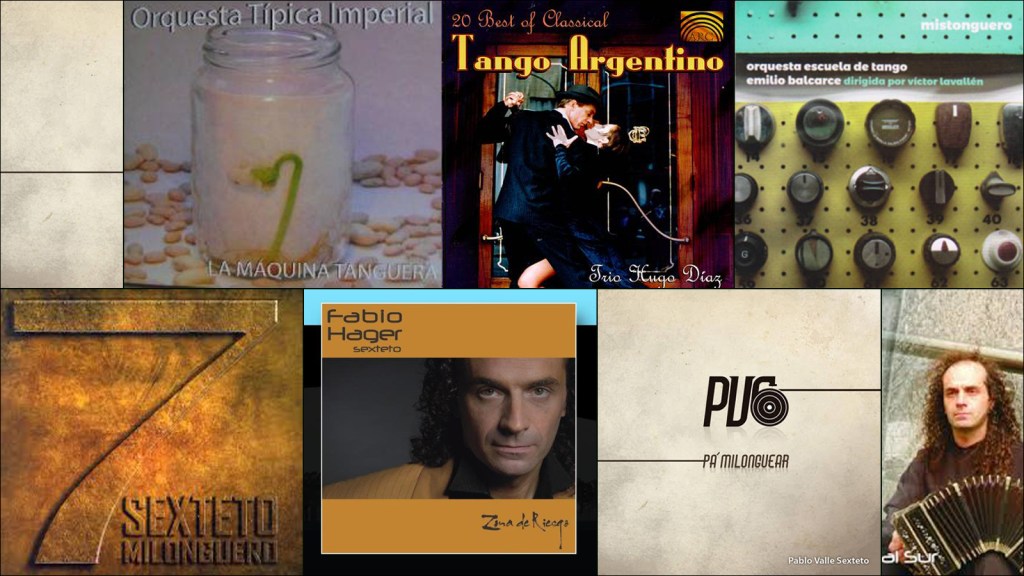
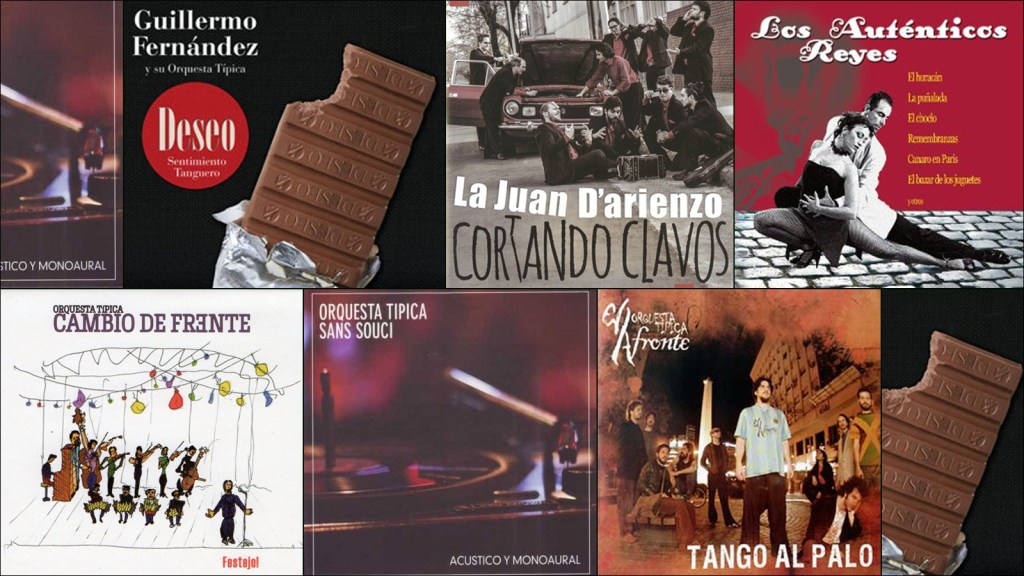
This edition explores further the many orquestas and smaller ensembles that have sprung up in Buenos Aires this century. Some are professional ensembles supporting stage shows and other tango events. Others are made up of young musicians and sadly these ensembles do not generally have a long life span, but they all bring the original tone of live tango back to the milongas while they flourish. That’s this Sunday on Tango Capital, 7:00pm to 8:00pm:
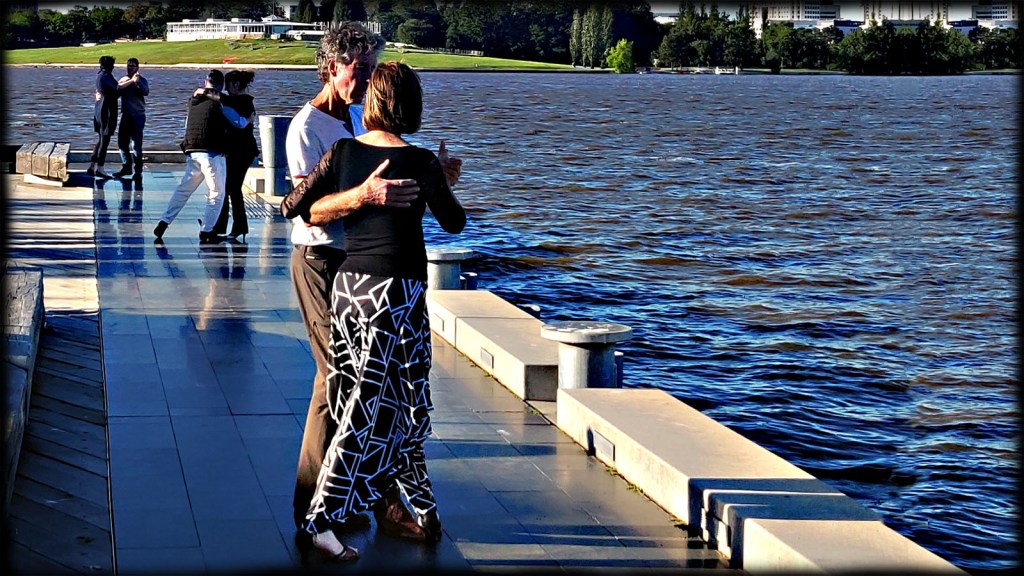
Tango music playing over the lake, a smooth surface for dancing – and all it needs it you. Bring a dance partner or drop by for a chat. Covid-19-safe tango in the Tango Capital, every Tuesday throughout the summer.
DAY: Tuesdays, from 1 December.
TIME: 5:30pm-7:30pm (unless actually raining)
WHERE: Queen Elizabeth Terrace, Parkes.In front of the Reconciliation Monument on the south bank of Lake Burley Griffin, near the Waterfront Restaurant, Parliamentary Triangle, Canberra.
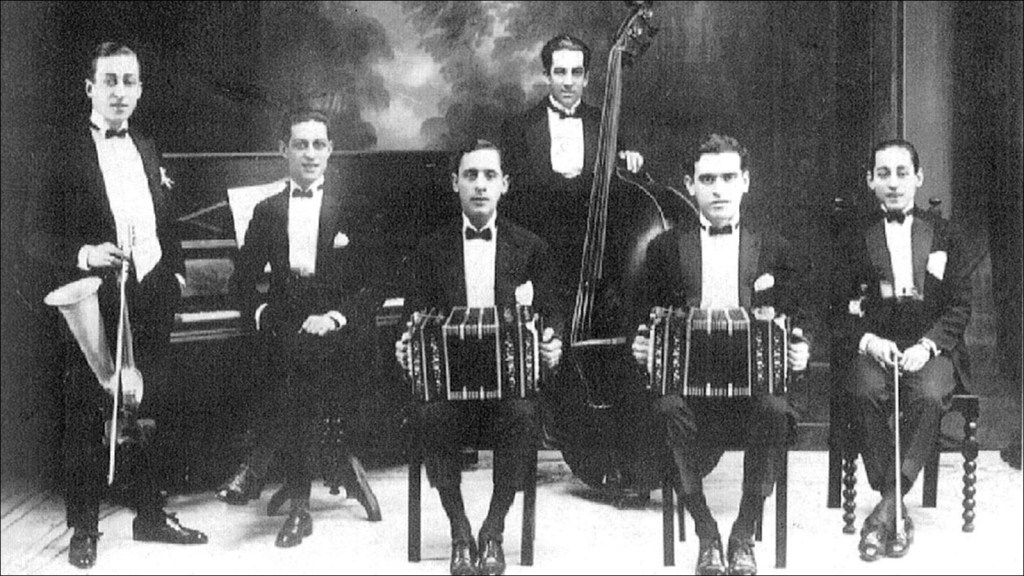
Last edition looked at the professional trajectory of the De Caro brothers. While it is Julio De Caro that is remembered, and who’s birthday has been selected as “Tango Day”, he would not have been as successful without his brother Francisco. This edition explores their legacy in more detail. That’s this Sunday on Tango Capital, 7:00pm to 8:00pm:
Image:The first De Caro sextet, in 1924. Left to right: Julio De Caro (leader & cornet-violin), Francisco De Caro (piano), Pedro Maffia (bandoneón, Enrique Krauss (double bass), Pedro Laurenz (bandoneón), Emilio De Caro (violin). Image in public domain.
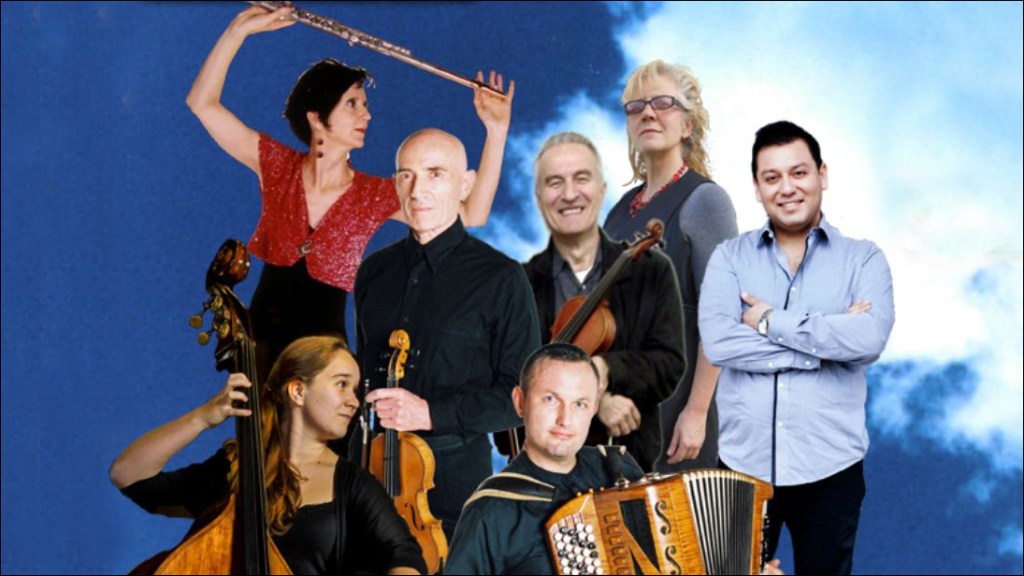
The trajectory of Tango Paradiso reflects that of tango in some key ways. Listen in to explore their music, to look at the life and times of Julio De Caro, and for a quick round up of What’s On. That’s this Sunday on Tango Capital, 7:00pm to 8:00pm:
Moshlo Thackrah and his partner, the flautist Carla Thackrah, formed the core of Tango Paradiso from its initial incarnation as a duo of Moshlo on violin and Daniel Rojas on piano through to quartet and sextet arrangements incorporating a range of musicians from Australia and Argentina. Marina Varney joined as singer in 2003; Nadia Piave joined as singer in 2013. From 2004 Argentine musician Facundo Bericat also undertook much of the arrangements.
Paul Hankinson (2004) and Argentine Facundo Bericat (2006) succeeded Daniel Rojas on piano, although Rojas returned in 2013. Early on Marko Deferri featured on accordion and remained through 2013; Argentinean bandoneonista Xavier Sanchez joined them in recordings made in 2006. Violinists included Joel (2002), Roland Aneney (2004), Romano Crivici (2013), and Eugenie Shaw(2009). Bassists included Andrew Shaw (2003-2009), John Varney (2004), Bella Brown (2013) and Argentine Sergio Rivas (2006). Other musicians have included Christian Gante in Australia, and Fernando Dieguez and Hugo Sanchez in Argentina.
PLAYLIST:
El Cabure, from lunfardo, meaning ‘The Ladies’ Man’; recorded by Carlos Di Sarli on 6 December 1951; a tango with music composed by Arturo De Bassi, first recorded in 1913.
Mala Pinta, meaning ‘Bad Look’, and also known as ‘Mala Estampa’; recorded by Julio De Caro on 27 August 1928; a tango with music composed by Julio De Caro & Francisco De Caro.
Todo Corazón, meaning ‘All Heart’; recorded by Julio De Caro in 1924; a tango with music composed by Julio De Caro in 1921 and lyrics by José María Ruffett.
Saca Chispas, meaning ‘Takes Sparks’; recorded by Julio De Caro on 10 March 1938; a milonga with music composed by Julio De Caro, and sung by Luis Díaz.
Flores Negras, meaning ‘Black Flowers’; recorded by Julio De Caro on 16 September 1942; a tango with music composed by Francisco De Caro, first recorded in 1927.
Mi Dolor, meaning ‘My Grief’; recorded by Julio De Caro on 27 October 1950; a tango with music composed by Carlos Marcucci, first recorded in 1926, lyrics by Orlando Verri, and sung by Orlando Verri.
Volver, meaning ‘To Return’; from the collection ‘Tango Paradiso’ released in 2005, recorded by Tango Paradiso in 2004; a tango with music composed by Carlos Gardel in 1934, lyrics by Alfredo La Pera, and sung by Marina Varney.
Nueve De Julio, meaning ‘9th of July’; from the collection ‘Tango Paradiso’ released in 2005, recorded by Tango Paradiso in 2004; a tango with music composed by José Luis Padula, first recorded in 1916 and lyrics by Lito Bayardo. The name is a reference to a significant day in Argentina’s struggle for independence from Spain.
Boedo; from the collection ‘Argentino’ released in 2006, recorded by Tango Paradiso in 2006; a tango with music composed by Julio De Caro in 1928 and lyrics by Francisco Bautista. The name is a reference to the suburb of Boedo in Buenos Aires, which is in turn named for Mariano Boedo, a politician of the independence movement .
Fievre, meaning ‘Fever’, and also known as ‘Fiebre de Tango’; from the collection ‘Tango Paradiso’ released in 2005, recorded by Tango Paradiso in 2004; a tango with music composed by Astor Piazzolla. Composed 1955 or earlier.
A Don Agustín Bardi, and also known as ‘Don Agustín Bardi’; from the collection ‘Argentino’ released in 2006, recorded by Tango Paradiso in 2006; a tango with music composed by Horacio Salgán, first recorded in 1950. The name is a reference to the tango musician of that name.
Corralera, from the collection ‘Argentino’ released in 2006, recorded by Tango Paradiso in 2006; a milonga with music composed by Anselmo A Aieta, first recorded in 1956. The name is a reference to a person living in the suburb of Corrales, near the stockyards of the abbotoirs that fed the beef export industry.
Nocturna, meaning ‘Nocturne’; from the collection ‘Tango Paradiso’ released in 2005, recorded by Tango Paradiso in 2004; a milonga with music composed by Julián Plaza, first recorded in 1961.
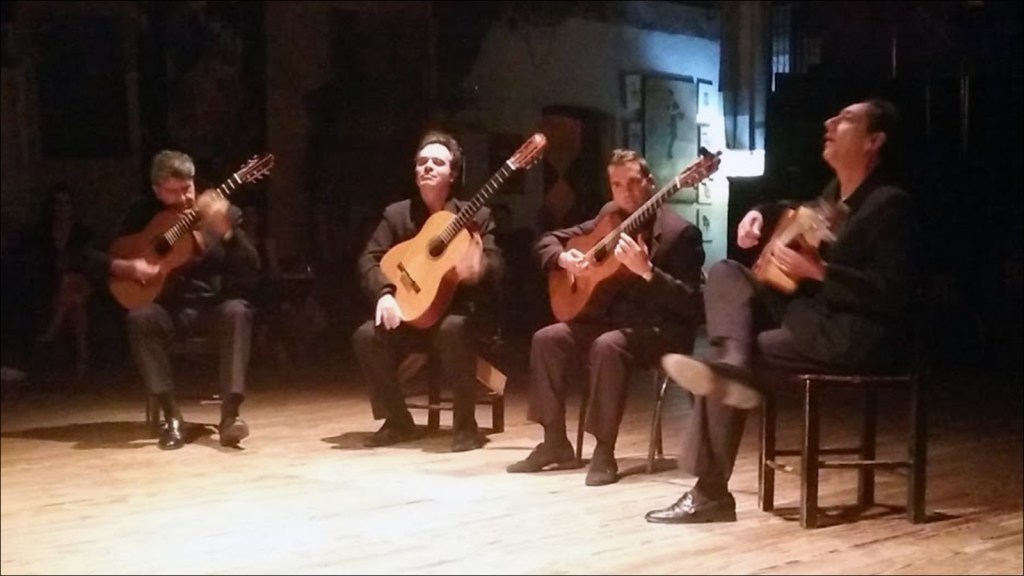
The guitar was the original source of rhythm in tango music, until it was ousted by the piano in 1914, and from then on the guitar was only heard as a feature instrument at milongas, if at all. This edition is the second of a series exploring the music of the bailable tradition as played by modern guitarists. That’s this Sunday on Tango Capital, 7:00pm to 8:00pm:
Tango Capital returns to play the fourth Sunday of the month broadcasting a milonguita playlist for dancers. That’s this Sunday on Tango Capital, 7:00pm to 8:00pm:
One of the joys of travelling to Buenos Aires is the opportunity to dance to live music most nights of the week. The musical techniques and traditions of tango are still found there, transmitted now as much by formal institutions as from musician to musician, and so while there are many ensembles developing tango in new directions, there are also others firmly focused on dancing tango. Live music was of course the standard in the hey-day of tango, bringing variations in beat and styling that offer the dancer opportunities to improvise. This is the fourth in a series of special editions exploring the music of these newer ensembles. That’s this Sunday on Tango Capital, 7:00pm to 8:00pm:





 Tango Capital