Welcome to “Mirada”

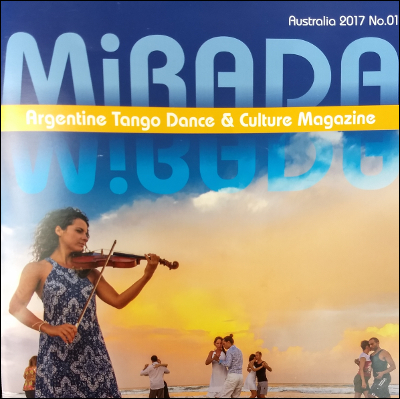
After a technical hitch two weeks ago the interview with Sydney tango DJ Alex Nodelman re-starts, we take a look at “Mirada”, the new Australian magazine for

2018-03-02 - Mirada.jpg


tangaroos, and another at the collaboration of Fiorentino and Troilo. That’s Tango Capital, Sunday evening from 7:00pm to 8:00pm:

Image: The front cover of issue 1 of Mirada, the new Australian tango magazine.

The Accordion In The Americas


2018-02-15 - The Accordion In The AmericasThere’s a review from a tango perspective of the book The Accordion In The Americas, an interview with Sydney tango DJ Alex Nodelman starts, and a look at the life, times, and music of Mariano Mores features. That’s Tango Capital, Sunday evening from 7:00pm to 8:00pm:

Image: Cover of The Accordion In The Americas, 2012, edited by Helena Simonett, University of Illinois Press, USA.

PLAYLIST:

  • Dejame no quiero verte mas , meaning “Leave Me, I Don’t Want To See You Anymore”, from Francisco Canaro, recorded on 28 May 1947 with Nelly Omar singing, a tango with music and lyrics composed in 1936 by Mariano Mores, Francisco Canaro, and Ivo Pelay.

  • Uno, meaning “One”, from Mariano Mores recorded on 22 March 1957 with Carlos Acuña singing, composed by Mariano Mores in 1948 with lyrics by Enrique Santos Discépolo.

  • Cuartito Azul, meaning “Little Blue Room”, from Francisco Canaro recorded on 14 September 1939 with Francisco Amor singing, a tango composed in 1938 by Mariano Mores and with lyrics by Mario Battistella.

  • Adiós Pampa Mía, “Good-bye, My Pampa”, a frankly sentimental lament for a long-vanished gaucho culture written by Mariano Mores with Francisco Canaro and Ivo Pelay in 1945, and here recorded by Mariano Mores on 22 March 1957 with Carlos Acuña singing

  • El Tamango, meaning “The Clod-Hopper”, from Anibal Troilo, recorded on 23 October 1941, a tango composed by Carlos Posados.

  • Triunfal, meaning “Triumphant”, a piece Piazzolla wrote early on in his career and which excited Boulanger so much that after hearing only 8 bars she advised that Piazzolla to stick with tango-related musical forms. This recording is from the “Adios Nonino” collection of 1991, but was originally recorded during the second “Montevideo recordings” by Piazzolla probably in 1960 shortly after he wrote it.

  • Pasión, meaning “Passion”, from Juan D’Arienzo recorded on 2 July 1937 , a vals composed by Alberto Cosentino and with lyrics by Juan Miguel Velich, but this is an instrumental version.

  • La Cicatriz, meaning, “The Scar” a milonga from Juan D’Arienzo recorded on 31 October 1939 with Alberto Echagüe singing music and lyrics composed by Raúl Aguirrezabalaga.

  • El Olivo, meaning “The Olive Tree”, from Juan D’Arienzo recorded on 14 July 1941 with Héctor Mauré singing, a tango composed by Antonio Scatasso and Domingo Julio Vivas and with lyrics by Carlos Ponciano Cabral.


Supermoon – Orquesta La Luna

2018-02-01 - Orquesta La Luna

Orquesta La Luna played their first gig for 2018 at the Camelot Lounge in Sydney, the interview with Wei-Siong Liang of Launceston concludes his observations on linkages between tango and the martial arts, and the singer Teófilo Ibañez features. That’s Tango Capital, Sunday evening from 7:00pm to 8:00pm:

Image: Orquesta La Luna, 28 January 2018, at the Camelot Lounge, Sydney.


“Yeites of the Tango Guitar”, with Owen Salome

2018-01-20 - Owen Salome, 28 October 2017


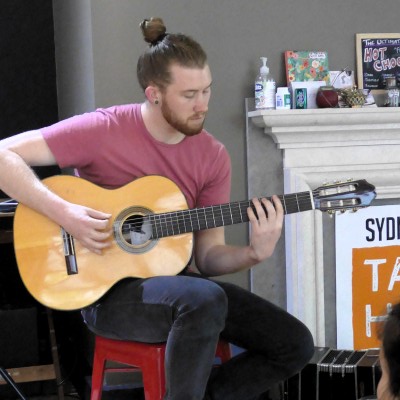
There is a discussion of Owen Salome’s presentation on the guitar-playing techniques specific to tango, the interview with Wei-Siong Liang of Launceston continues his observations on linkages between tango and the martial arts, and the double bass player Kicho Díaz features,. That’s Tango Capital, Sunday evening from 7:00pm to 8:00pm:

Image: Owen Salome, 28 October 2017, at the Sydney Tango House.

PLAYLIST:

  • Milongueando En El Cuarenta, meaning ‘Dancing Tango In The 1940s’; recorded by Anibal Troilo on 26 December 1941; a tango with music composed by Armando Pontier, and sung by .
  • Contrabajisimo, meaning ‘Excellent Double Bass’; from the ‘Hora Cero’ release recorded by Astor Piazzolla in 1985; a concierto with music composed by Astor Piazzolla.
  • Danzarín, meaning ‘Dancer’; recorded by Anibal Troilo on 15 December 1958; a tango with music composed by Julián Plaza.
  • Kicho; recorded by Sexteto Mayor in 1977; a concierto with music composed by Astor Piazzolla, first recorded in 1970. The name is a reference to the double bass player Kicho Díaz.
  • El Irrestistible, meaning ‘The Irresistable’; recorded by Francisco Canaro on 9 April 1959; a tango with music composed by Lorenzo Logatti, first recorded in 1931 and lyrics by Carlos Pesce.
  • El Porteñito, meaning ‘The Young Man of Buenos Aires’; from the ‘Hugo Rivas’ release recorded by Hugo Rivas in 2013 with guest artist Luis Salinas; a concierto with music composed by Ángel Villoldo, first recorded in 1924 and lyrics by Carlos Pesce and Antonio Polito.
  • La Cumparsita, meaning ‘The Little March’; recorded by Carlos Gardel on 17 December 1927; a cancion with music composed by Gerado Matos Rodríguez in 1916 and lyrics by Pascual Contursi, Enrique Maroni, and Gerado Matos Rodríguez.
  • Lagrimas Y Sonrisas, meaning ‘Tears And Smiles’; recorded by Juan D’Arienzo on 29 September 1936; a vals with music composed by Pascual De Gullo, first recorded in 1914 and lyrics by Francisco Gullo.

Francisco Amor – the singing

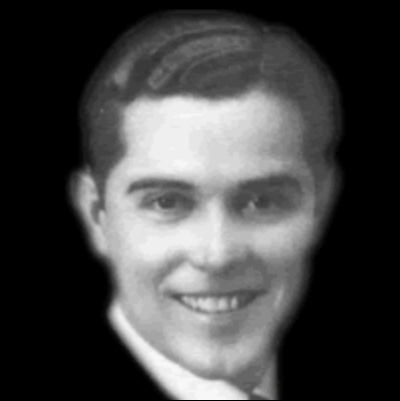
2018-01-11 - Francisco Amor (2)

Last edition looked at the life and times of Francisco Amor, and this edition showcases his singing with Francisco Canaro from 1938 to 1941: that’s Tango Capital this Sunday evening from 7:00pm to 8:00pm:

Image Credit: http://www.todotango.com/creadores/biografia/917/Francisco-Amor/

PLAYLIST:

  • A La Huacachina, meaning ‘To The Tryst, Maid’; recorded by Francisco Canaro on 27 February 1939; a paso doble sung by Francisco Amor. The name is a reference to a word used by indigenous cultures to indicate a meetiing place for lovers; “china” is reference to a young woman of indigenous background.
  • La Zandunga, meaning ‘Celebration’; recorded by Francisco Canaro on 30 March 1939; a canción popular mexicana with music composed by Andres Gutierrez, lyrics by Máximo Ramó Ortiz, and sung by Francisco Amor.
  • Las Promesas En Amor, meaning ‘The Promises In Love’; recorded by Francisco Canaro on 13 October 1939; a ranchera with music composed by Francisco Canaro, lyrics by Ivo Pelay, and sung by Francisco Amor.
  • Patria Hermana, meaning ‘Beautiful Fatherland’; recorded by Francisco Canaro on 11 September 1939; a marcha heroica with music composed by Francisco Canaro, lyrics by Ivo Pelay, and sung by Francisco Amor and Ernesto Famá.
  • Cuartito Azul, meaning ‘Little Blue Room’; recorded by Francisco Canaro on 14 September 1939; a tango with music composed by Mariano Mores in 1938, lyrics by Mario Battistella, and sung by Francisco Amor.
  • Salud, Dinero, Y Amor, meaning ‘Health, Wealth, And Love’; recorded by Francisco Canaro on 11 September 1939; a vals with music and lyrics composed by Rodolfo Sciammarella in 1939, and sung by Francisco Amor.
  • Cuando Estaba Enamorado, meaning ‘When I Was In Love’; recorded by Francisco Canaro on 14 March 1940; a vals with music and lyrics composed by Rodolfo Sciammarella, and sung by Francisco Amor.
  • Melodía Oriental, meaning ‘Eastern Melody’; recorded by Francisco Canaro on 16 May 1940; a tango with music composed by Juan Carlos Howard and Roberto Zerrillo, lyrics by Enrique Cadícamo, and sung by Francisco Amor.
  • Pájaro Ciego, meaning ‘Blind Bird’; recorded by Francisco Canaro on 22 May 1940; a tango with music composed by Antonio Bonavena, lyrics by Lito Bayardo, and sung by Francisco Amor and Ernesto Famá.
  • El Día Que Te Fuiste, meaning ‘The Day That You Left’; recorded by Francisco Canaro on 9 May 1940; a vals with music and lyrics composed by Héctor Lomuto, and sung by Francisco Amor.
  • Muchachita Porteña, meaning ‘Little Girl Of Buenos Aires’; recorded by Francisco Canaro on 26 January 1940; a vals with music composed by Mariano Mores, lyrics by Alberto Vacarezza, and sung by Francisco Amor.
  • En Esta Tarde Gris, meaning ‘On This Grey Afternoon’; recorded by Francisco Canaro on 9 May 1941; a tango with music composed by Mariano Mores in 1941, lyrics by José María Contursi, and sung by Francisco Amor.
  • Copa De Ajenjo, meaning ‘Cup Of Absinthe’; recorded by Francisco Canaro on 19 June 1941; a tango with music composed by Juan Canaro, first recorded in 1930, lyrics by Carlos Pesce, and sung by Francisco Amor.
  • Bajo El Cielo Azul, meaning ‘Under The Blue Sky’; recorded by Francisco Canaro on 9 May 1941; a vals criollo with music composed by Francisco Canaro, lyrics by Ivo Pelay, and sung by Francisco Amor.
  • En La Noche Azul, meaning ‘In The Blue Night’; recorded by Francisco Canaro on 9 Janaury 1941; a vals with music composed by Francisco Maquiera, lyrics by Juan Carlos Patrón, and sung by Francisco Amor.
  • Lo Que El Viento Se Llevo, meaning ‘Gone With The Wind’; recorded by Francisco Canaro on 9 January 1941; a tango with music composed by Roberto Luratti, lyrics by Alfredo Basso, and sung by Francisco Amor.
  • Amor, Amor Veni, meaning ‘Love, Love, Come’; recorded by Francisco Canaro on 9 January1 941; a vals with music and lyrics composed by Mariano Ramiro Ochoa Induráin, and sung by Francisco Amor.

Wei-Siong Liang – tango & the martial arts

Wei-Siong Liang of Launceston discusses 2018-01-02 Wei-Siong Liangtango from the perspective of martial arts, and the singing of Francisco Amor features, along with a retrospective look at Julie Taylor’s Paper Tangos. That’s Tango Capital, Sunday evening from 7:00pm to 8:00pm:
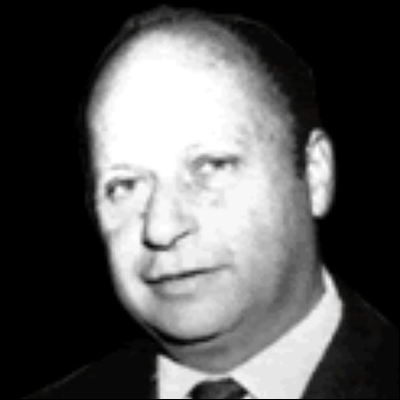
Image Credit: Wei-Siong Liang.

PLAYLIST:

  • Cuartito Azul, meaning ‘Little Blue Room’; recorded by Francisco Canaro on 14 September 1939; a tango with music composed by Mariano Mores in 1938, lyrics by Mario Battistella, and sung by Francisco Amor.
  • Bajo El Cielo Azul, meaning ‘Under The Blue Sky’; recorded by Francisco Canaro on 9 May 1941; a vals criollo with music composed by Francisco Canaro, lyrics by Ivo Pelay, and sung by Francisco Amor.
  • Mate Cocido, meaning ‘Steaming Hot Maté’; recorded by Francisco Canaro on 30 March 1939; a ranchera with music composed by Enrique N García, lyrics by Lito Bayardo, and sung by Francisco Amor. The name is a reference to the tea brewed from the leaves of a South American holly bush.
  • En Esta Tarde Gris, meaning ‘On This Grey Afternoon’; recorded by Francisco Canaro on 9 May 1941; a tango with music composed by Mariano Mores in 1941, lyrics by José María Contursi, and sung by Francisco Amor.
  • Un Cacho ‘E Tango, from lunfardo, meaning ‘A Cluster Of Tango’; recorded by Alfredo De Angelis on 30 May 1952; a tango with music composed by Alfredo De Angelis, lyrics by Francisco Amor, and sung by Carlos Dante.
  • El Estrellero, meaning ‘The Star’; recorded by Florindo Sassone on 15 April 1953; a tango with music composed by Mariano Mores, lyrics by Francisco Amor, and sung by Rodolfo Galé. The name is a reference to the leading man of a show.
  • Milonga Del Ángel, meaning ‘Dance Of The Angel’; recorded by Astor Piazzolla in 1985; a concierto with music composed by Astor Piazzolla in 1965.
  • Pensalo Bien, meaning ‘Think It Over’; recorded by Juan D’Arienzo on 22 June 1938; a tango with music composed by Juan José Visciglio, lyrics by Luis Alberto López, and sung by Alberto Echagüe.

Héctor Stamponi – the compositions


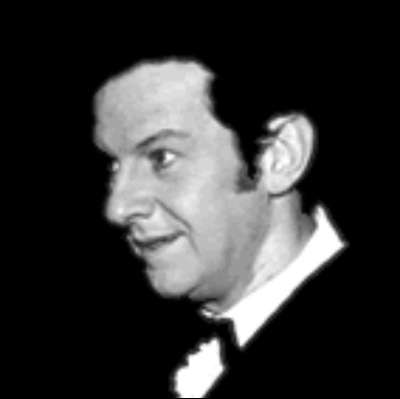
2017-12-27 - Hector Stamponi.jpg

The compositions of Héctor Stamponi as interpreted by tango ensembles over 6 decades, from 1939 to 1999: that’s Tango Capital this Sunday evening from 7:00pm to 8:00pm:

Image Credit: http://www.todotango.com/creadores/ficha/70/Hector-Stamponi

PLAYLIST:

  • Inquietud, meaning ‘Anxiety’; a tango recorded by Osvaldo Fresedo on 12 July 1939, with music composed by Héctor Stamponi and Enrique Francini, lyrics by Oscar Rubens and sung by Ricardo Ruíz.
  • Bajo Un Cielo De Estrellas, meaning ‘Under A Sky Of Stars’; a vals recorded by Francisco Lomuto on 9 April 1941, with music composed by Héctor Stamponi and Enrique Francini in 1941, lyrics by José María Contursi and sung by Fernando Díaz and Jorge Omar.
  • Azabache, meaning ‘Jet’, the name a reference to the jet black skin of the negros who first played the candombe; a candombe recorded by Francisco Lomuto on 20 October 1942, with music composed by Héctor Stamponi and Enrique Francini, lyrics by Homero Expósito and sung by Fernando Díaz.
  • Junto A Tu Corazon, meaning ‘Next To Your Heart’; a tango recorded by Carlos Di Sarli on 23 June 1942, with music composed by Héctor Stamponi and Enrique Francini in 1940, lyrics by José María Contursi and sung by Alberto Podestá.
  • Pedacito De Cielo, meaning ‘Little Bit Of Sky’; a vals recorded by Miguel Caló in 1942, with music composed by Héctor Stamponi and Enrique Francini in 1942, lyrics by Homero Expósito and sung by Alberto Podestá.
  • Pueblito De Provincia, meaning ‘Small Provincial Town’; a tango recorded by Rodolfo Biagi on 15 January 1943, with music and lyrics by Héctor Stamponi and sung by  Jorge Ortiz.
  • Mi Cantar, meaning ‘My Poem’; a tango recorded by Miguel Caló on 21 May 1943, with music composed by Héctor Stamponi, lyrics by Homero Expósito and sung by Jorge Ortiz.
  • Pobre Negra, meaning ‘Poor Negro Girl’; a candombe recorded by Miguel Caló on 10 June 1943, with music composed by Héctor Stamponi and Enrique Francini, lyrics by Homero Expósito and sung by Jorge Ortiz.
  • Que Me Van A Hablar De Amor, meaning ‘What Are They Going To Say To Me About Love’; a tango recorded by the orquesta of Francini-Pontier on 14 March 1946, with music composed by Héctor Stamponi in 1946, lyrics by Homero Expósito and sung by Alberto Podestá.
  • Flor De Lino, meaning ‘Flax Flower’; a vals recorded by Anibal Troilo on 29 April 1947, with music composed by Héctor Stamponi in 1947, lyrics by Homero Expósito and sung by Floreal Ruíz.
  • Triste Comedia, meaning ‘Sad Comedy’; a tango recorded by José Basso in 1949, with music composed by Héctor Stamponi in 1949, lyrics by Oscar Rubens and sung by Francisco Fiorentino.
  • La Intriga, meaning ‘The Intrigue’; a tango recorded by Alfredo J Gobbi on 23 November 1950, with music composed by Héctor Stamponi in 1950, lyrics by Héctor Marcó and sung by Jorge Maciel.
  • Un Momento, meaning ‘One Moment’; a vals recorded by Horacio Salgan on 20 May 1953, with music composed by Héctor Stamponi and Enrique Francini, first recorded in 1951, lyrics by Homero Expósito and sung by Roberto Goyeneche.
  • Perdoname, meaning ‘Forgive Me’; a tango recorded by Osvaldo Fresedo on 13 December 1954, with music composed by Héctor Stamponi, lyrics by Cátulo Castillo and sung by Héctor Pacheco.
  • Alguien, meaning ‘Someone’; a tango recorded by Rodolfo Biagi on 24 March 1956, with music composed by Héctor Stamponi in 1956, lyrics by Eugenio Majul and sung by Hugo Duval.
  • Quedemonos Aqui, meaning ‘Let’s Stay Here’; a tango recorded by Enrique Francini on 20 December 1956, with music composed by Héctor Stamponi in 1956, lyrics by Homero Expósito and sung by Carlos Ferrán.
  • Festejando from the ‘Tango Para Bailar vol.1’ release in 1998, meaning ‘Celebrating’; a tango recorded by Color Tango; in 1998 with music composed by Héctor Stamponi, first recorded in 1961.
  • El Ultimo Café from the ‘El Ultimo Café’ release in 1999, meaning ‘The Last Coffee’; a tango recorded by Trio Pantango in April 1999 with music composed by Héctor Stamponi in 1963 and lyrics by Cátulo Castillo.