

Tonight there is a re view of Modern Tango World, the new magazine that recently turned 1, and some post-Gotan Project music. Then the focus is on Uruguay with an introduction to the life and music of Juan ‘Firpito’ Baüer, and an interview with Nestor Vaz. That’s Tango Capital at 7:00pm AEDT tonight
- on 2xxfm 98.3 in Canberra
- streaming live to the internet from http://www.2xxfm.org.au/listen
PLAYLIST:
- El Amanecer, meaning ‘The Dawn’, a tango written by Roberto Firpo and recorded by him on 4 January 1938.
- No Te Quiero Más, meaning ‘I do not love you any more’, a tango recorded by Enrique Rodríguez, on 15 March 1940, with music composed by Juan Baüer, with lyrics by Juan Antonio Estape, and sung by Armando Moreno.
- Adíos, Arrabal, meaning ‘Good-bye, Neighbourhood’, a tango recorded by Julio De Caro in 1930, with music composed by Juan Baüer in 1930, with lyrics by Carlos César Lenzi, and sung by Pedro Lauga.
- Juventud, meaning ‘Youth’, a tango recorded by Carlos Gardel singing on 20 March 1930, with music composed by Juan Baüer in 1929, and with lyrics by Roberto Aubriot Barboza.
- La Mano Encima, meaning ‘The Upper Hand’, a neotango recorded by Plaza Francia in 2014, with music and lyrics by Eduardo Makaroff, and sung by Catherine Ringer.
- Cenizas, meaning ‘Ashes’, a neotango recorded by Plaza Francia in 2014, with music and lyrics by Eduardo Makaroff, and sung by Catherine Ringer.
- La Muerte Del Ángel, meaning ‘Death of the Angel’, a concierto recorded by Nestor Vaz Quinteto in 2008 of music composed by Astor Piazzolla.
- Palersur, a candombe written by Nestor Vaz in 2013 and recorded by Nestor Vaz Quinteto in 2015.
 To those listening on the internet stream, I do apologise for the technical problem that arose on the weekend. The program did not stream and accordingly I am making this edition of the podcast available freely so that listeners can hear the majority of the content.
 a to the capital, Buenos Aires that had started with independence and federation a century earlier. Change is always threatening to someone, and one reaction was the reification of rural Argentina and denigration of urban Buenos Aires as morally inferior to the traditions of the country. The milonga became associated with the noble rural lifestyle, epitomised by the mythologised gaucho, whilst the tango was identified with the sinful city – although to avoid confusion I should at this point note that the legend of the brothel origins of tango has been comprehensively debunked.
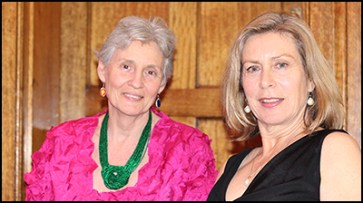 This week Tango Capital explores a what-if scenario, looking at the life and music of Charlo.Then an ongoing series of interviews with DJs kicks off, with Adelaide DJ
 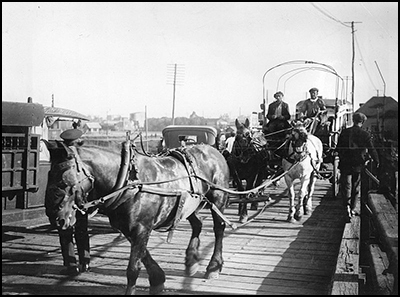 Puente Alsina is a famous bridge in Buenos Aires, one so famous it has a tango named for it. But both words and music of that tango were written in 1926 by Benjamín Tagle Lara whereas the current neo-colonial structure that links the suburbs of Nueva Pompeya to Valentin Alsina was opened in 1938. In fact the words refer to the second of the bridges, a temporary iron structure that was in use from 1910 to 1938.


 Who was Froilán Aguilar?
 Tango Capital