
Trio Argentino – the music

2018-08-07 - Trio Argentino

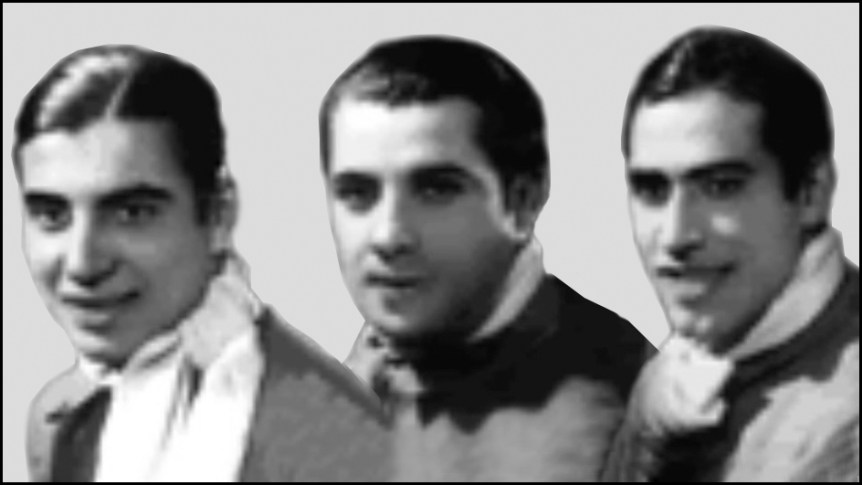
After last week’s introduction to the unusual history of Trio Argentino, this week takes a deeper dive into the Trio’s music, from their earliest recordings in 1928 through to 1934, a couple of years before the Trio disbanded. That’s this Sunday on Tango Capital, 7:00pm to 8:00pm:

Image Credit: http://www.todotango.com/comunidad/portadas/nro/170/

PLAYLIST:

  • Mañanitas de Montmatre, meaning ‘Mornings of Montmartre’; recorded by Trio Argentino in 1928; a tango with music composed by Lucio Demare and lyrics by Agustín Irusta and Roberto Fugazot. The name is a reference to Montmartre in France, as Trio Argentino initially performed for some years in Europe.
  • Irigoyen Solo, meaning ‘Only Irigoyen’; recorded by Trio Argentino in 1928; a tango with music composed by Lucio Demare and lyrics by Agustín Irusta and Roberto Fugazot.
  • Dandy, meaning ‘Dandy’; recorded by Trio Argentino in 1930; a tango with music composed by Lucio Demare, first recorded in 1928 and lyrics by Agustín Irusta and Roberto Fugazot.
  • Bandoneón Arrabalero, meaning ‘Bandoneón of the Suburbs’; recorded by Trio Argentino in 1929; a tango with music composed by Bachicha in 1928, lyrics by Pascual Contursi, and sung by Roberto Fugazot. The name is a reference to the arrabaleros, the poorer suburbs of Buenos Aires where tango evolved.
  • La Muchachada Del Centro, meaning ‘The Woman Of Centro’; recorded by Trio Argentino in 1932; a tango with music composed by Francisco Canaro, lyrics by Ivo Pelay, and sung by Roberto Fugazot. The name is a reference to the core of Buenos Aires, Centro, where tango bars and clubs lined Esmerelda and Corrientes Streets.
  • Noche De Reyes, meaning ‘Night Of Kings’; recorded by Trio Argentino in 1928; a tango with music composed by Pedro Maffia in 1927, lyrics by Jorge Curi, and sung by Agustín Irusta.
  • No Te Engañes, Corazón, meaning ‘Don’t Deceive Yourself, Heart’; recorded by Trio Argentino in 1928; a tango with music and lyrics composed by Rodolfo Sciammarella in 1926, and sung by Agustín Irusta.
  • Amurado, meaning ‘Walled’; recorded by Trio Argentino in 1928; a tango with music composed by Pedro Maffia and Pedro Laurenz in 1926, lyrics by José Pedro de Grandis, and sung by Roberto Fugazot.
  • Adiós Muchachos, meaning ‘Good-bye,Lads’; recorded by Trio Argentino in 1928; a tango with music composed by Julio César Alberto Sanders in 1927, lyrics by César Felipe Vedani, and sung by Roberto Fugazot.
  • Chiqué, from lunfardo, meaning ‘Pretentiously Ornamented’; recorded by Trio Argentino in 1929; a tango with music and lyrics composed by Ricardo Luis Brignolo in 1920.
  • Lágrimas, meaning ‘Tears’; recorded by Trio Argentino in 1930; a tango with music composed by Eduardo Arolas, first recorded in 1916 and lyrics by Héctor Polito.
  • Boedo; recorded by Trio Argentino in 1931; a tango with music composed by Julio De Caro in 1928 and lyrics by Francisco Bautista Rímoli. The name is a reference to a working class suburb of that name in Buenos Aires.
  • La Mina Del Ford, meaning ‘Chick With A Ford’; recorded by Trio Argentino in 1928; a tango with music composed by Fidel Del Negro, Antonio Scatasso, and Enrique Maroni in 1924, lyrics by Pascual Contursi, and sung by Agustín Irusta and Roberto Fugazot.
  • Creáse O No, meaning ‘To Grow Or Not’; recorded by Trio Argentino in 1932; a tango with music composed by Francisco Canaro, lyrics by Enrique Santos Discépolo, Francisco Canaro, and Roberto Fontaina, and sung by Agustín Irusta and Roberto Fugazot. The name is a reference to allowing love to grow, perhaps.
  • Te Quiero, meaning ‘I Love You’; recorded by Trio Argentino in 1932; a tango with music and lyrics composed by Francisco Canaro in 1932, and sung by Agustín Irusta and Roberto Fugazot.
  • Musette, meaning ‘Little Muse’; recorded by Trio Argentino in 1929; a tango with music composed by Lucio Demare.
  • Alas Rotas, meaning ‘Broken Wings’; recorded by Trio Argentino in 1931; a tango with music composed by Lucio Demare.
  • Adiós Al Piano, meaning ‘Good-bye To The Piano’; recorded by Trio Argentino in 1934; a tango with music composed by Lucio Demare.
La Busca

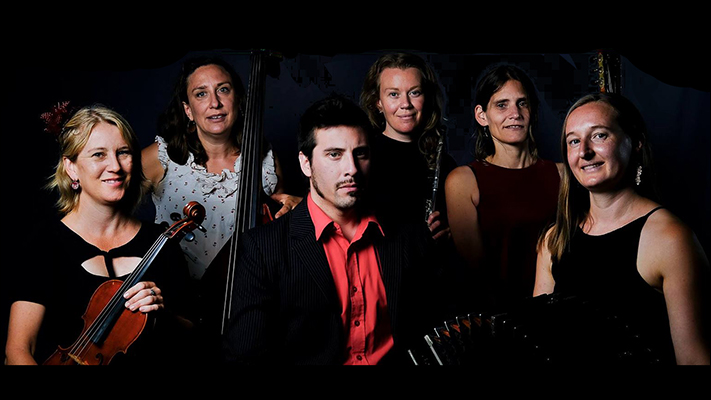
2018-08-05 - La BuscaThis week the music of Trio Argentino (Irusta, Fugazot, Demare) features, and there is a report on a recent performance @Boite World Harmonies by La Busca, in association with our sister radio station 3CR in Melbourne. That’s this Sunday on Tango Capital, 7:00pm to 8:00pm:
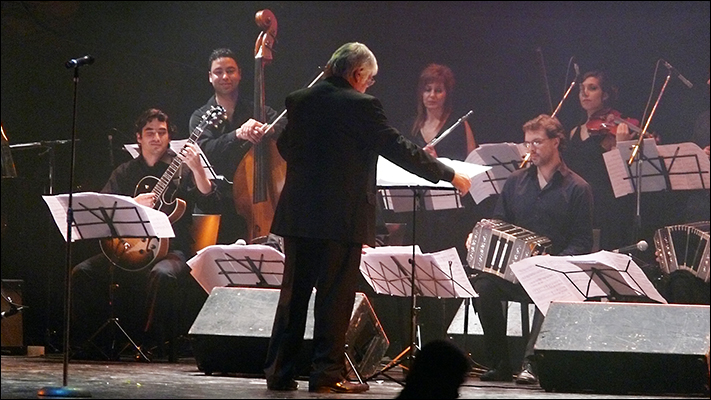
Image Credit: https://www.facebook.com/labuscatango/

PLAYLIST:

  • La Viruta, from Carlos Di Sarli, recorded on 5 August 1943, a tango composed in 1912 by Vicente Greco and with lyrics by Ernesto Temes, but this is an instrumental version—as indeed has every version of this song ever recorded.
  • La Mina Del Ford, from Trio Argentino, recorded in 1928 with Agustín Irusta and Roberto Fugazot singing in duo, a tango composed in 1924 by Fidel Del Negro, Antonio Scatasso, and Enrique Maroni, and with lyrics by Pascual Contursi. This is one of the earliest recordings of the Trio.
  • Noche De Reyes, from Trio Argentino, recorded in 1928 with Agustín Irusta singing, a tango composed in 1927 by Pedro Maffia and with lyrics by Jorge Curi.
  • Adiós Muchachos, from Trio Argentino, recorded in 1928 with Roberto Fugazot singing, a tango composed in 1927 by Julio César Alberto Sanders and with lyrics by César Felipe Vedani.
  • Dandy, from Trio Argentino, an instrumental tango recorded in 1930, composed in 1928 by the Trio—music by Lucio Demare, lyrics by Agustín Irusta and Roberto Fugazot.
  • Buscandote, from La Busca, recorded in 2017 with Juan Veron singing, a tango with music and lyrics by Lalo Scalise and first recorded in 1941.
  • Noche De Cristal, from La Busca, recorded in 2017 with Juan Veron singing, a tango with music and lyrics by Amy and Juan Veron.
  • Baldosa Floja, from La Busca, recorded in 2017 with Juan Veron singing, a milonga composed in 1957 by Florindo Sassone and Julio Baccazzi, with lyrics by Dante Gilardoni.
  • La Puñalada, from La Juan D’Arienzo, a milonga recorded in 2014, but originally written in 1933 by Pintín Castellanos and with lyrics by Celedonio Flores.
  • Desde El Alma, from La Juan D’arienzo, recorded in 2014, a vals composed in a century earlier, in 1914, by Rosita Melo. There are lyrics, 2 sets, in fact, but this is an instrumental version.

Contemporary Tango

2018-07-26 - Tango Emilio Balcarce School Orchestra playing at the 2010 Mundial finals

This edition it’s back to tango, and of the Argentine variety, but this time a special on modern tango orquestas. These young musicians are highly trained professional musicians schooled in the structures of masters such as Caló and Troilo, Pugliese and D’Arienzo, playing and recording danceable tango music live around Buenos Aires. Tango did not die in 1955; it just took a break for a few decades, and now it is evolving as a living thing again. That’s this Sunday on Tango Capital, 7:00pm to 8:00pm:

Image: Tango Emilio Balcarce School Orchestra playing at the 2010 Mundial finals

PLAYLIST:

  • Este Es El Rey, meaning ‘This Is The King’; recorded by La Juan D’Arienzo in 2014; a tango with music composed by Carlos Ángel Lázzari, Manuel Antonio Caballero, and Juan Polito, first recorded in 1971.
  • Felicia; recorded by La Juan D’Arienzo in 2014; a tango with music composed by Enrique Saborido, first recorded in 1927 and lyrics by Carlos Mauricio Pacheco. The name is a reference to a woman’s name.
  • Paciencia, meaning ‘Patience’; recorded by La Juan D’Arienzo in 2014; a tango with music composed by Juan D’Arienzo in 1937 and lyrics by Francisco Gorrindo.
  • Pregonera, meaning ‘Proclaimer’; recorded by Orquesta Victoria in 2010; a tango with music composed by Alfredo De Angelis in 1945 and lyrics by José Rótulo.
  • Flores Negras, meaning ‘Black Flowers’; recorded by Orquesta Victoria in 2010; a tango with music composed by Francisco De Caro, first recorded in 1927 and lyrics by Mario Gomila.
  • Cambalache, meaning ‘Junk Shop’; recorded by Orquesta Victoria in 2010; a tango with music and lyrics composed by Enrique Santos Discépolo in 1934. The name is a reference to the social and political environment of Argentina.
  • A Evaristo Carriego, meaning ‘To Evaristo Carriego’; recorded by Ojos de Tango in 2010; a tango with music composed by Eduardo Rovira, first recorded in 1969. The name is a reference to the poet Evarista Carriego, who inspired many early tango writers.
  • La Mariposa, meaning ‘The Butterfly’; recorded by Ojos de Tango in 2010; a tango with music composed by Pedro Maffia in 1921 and lyrics by Celedonio Flores.
  • Silbando, meaning ‘Whistling’; recorded by Ojos de Tango in 2010; a tango with music composed by Cátulo Castillo, and Sebastián Piana in 1923 and lyrics by José González Castillo (Juan de León).
  • El Marne; recorded by Sexteto Gato in 2013; a tango with music composed by Eduardo Arolas, first recorded in 1920 and lyrics by Gabriel Clausi.
  • Añoranzas, meaning ‘Annoyances’; recorded by Sexteto Gato in 2013; a tango with music composed by Luis Petrucelli, first recorded in 1939 and lyrics by Daniel López Barreto.
  • Inspiración, meaning ‘Inspiration’; recorded by Sexteto Gato in 2013; a tango with music composed by Peregrino Paulos in 1929 and lyrics by Luis Rubistein.
  • Danzarín, meaning ‘Dancer’; recorded by Sexteto Unitango in 2009; a tango with music composed by Julián Plaza, first recorded in 1958.
  • Trenzas, meaning ‘Braids’; recorded by Sexteto Unitango in 2009; a tango with music composed by Armando Pontier in 1944 and lyrics by Homero Expósito. The name is a reference to a woman’s hair.
  • Canaro En Paris, meaning ‘Canaro In Paris’; recorded by Sexteto Unitango in 2009; a tango with music composed by Alejandro Scarpino and Juan Caldarella, first recorded in 1927 and lyrics by José Antonio Scarpino.
  • Mi Dolor, meaning ‘My Sadness’; recorded by Orquesta Típica Misteriosa in 2013; a tango with music composed by Carlos Marcucci, first recorded in 1926 and lyrics by Manuel Meaños.
  • Sábado Inglés, meaning ‘English Saturday’; recorded by Orquesta Típica Misteriosa in 2013; a tango with music composed by Juan Félix Maglio, first recorded in 1920 and lyrics by Eugenio Cárdenas. The name is a reference to the English custom of only working a half-day on Saturdays, a custom imported into Argentina when British firms were contracted to build railway lines.

Finnish Tango – the music

2018-07-22 - Symbols of Finland

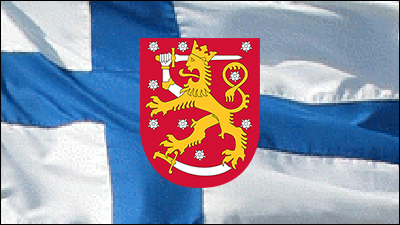
Last edition took a look at the history of Finnish tango and some of the distinguishing features of the music and dance that mark it out as a descendent of  the Northern hemisphere’s early response to tango – the Ballroom Tango. This edition will look at the music in more depth through a range of singers. That’s this Sunday on Tango Capital, 7:00pm to 8:00pm:

Image Credits: Flag – Janne Karaste; Coat of Arms – By Vzb83 – Own work, Public Domain, https://commons.wikimedia.org/w/index.php?curid=560472

PLAYLIST:

  • Illan Viimeinen Tango, meaning ‘Evening Time Tango’; recorded in 1959; with music and lyrics composed by Hatara Aarne, and sung by Eino Grön.
  • Särkymeitä Toiveita, meaning ‘Arms Of Hope’; recorded in 1973; with music composed by U Mattila, and sung by Eino Grön.
  • Elsa, Kohtalon Lapsi, meaning ‘Elsa, Child of Fate’; recorded in 1967; with music composed by P Naseva (born Erik Lindström), lyrics by T Kutvonen, and sung by Martti Innanen. This song was actually released as a parody, but went on to become a bit of a hit in the tango community.
  • Kohtalon Tango, meaning ‘Tango Of Fate’; recorded in 1996; with music composed by Riku Niemi, Saukki, and Unto Mononen, and sung by Arja Koriseva.
  • Tango Pelargonia, meaning ‘Geranium Tango’; recorded in 1997; with music composed by K Kuuva, and sung by Kari Kuuva. This song was actually released as a parody, but went on to become a big hit in the tango community.
  • Unikuva; recorded in 1974; with music composed by Kullervo Linna and Kullervo, and sung by Annikki Tahti.
  • Lapin Tango, meaning ‘Tango of Lappland’; with music composed by Unto Mononen. Unknown recording date but must be before 1968, the year that Unto Mononen died; possibly around 1959, when he played guitar in his own ensemble.
  • Sirkkjen Tanssi, meaning ‘Circus Dance’; with music composed by Unto Mononen. Unknown recording date but must be before 1968, the year that Unto Mononen died; possibly around 1959, when he played guitar in his own ensemble.
  • Hiljainen Kylätie, meaning ‘Quiet Village Road’; recorded by Metro-Tytöt (the ‘Metro Girls’) in 1956; with music composed by Reino Helismaa, Toivo Kärki, Orvokki Itä, and Pedro De Punta.
  • Tähdet Meren Yllä, meaning ‘Stars Over The Sea’; recorded in 1962; with music composed by Unto Mononen, and sung by Reijo Taipale.
  • Yön Tummat Siivet, meaning ‘Dark Wings of Night’; recorded in 1966; with music composed by Unto Mononen, and sung by Reijo Taipale with Kullervo Castle’s orchestra.
  • Hopeinen Kuu, meaning ‘Silvery Moon’; recorded in 1967; with music composed by Reino Helismaa, Saukki, Jaakko Salo, Gualtiero Malgoni, Kari Tuomisaari, and Tauni Kouta, and sung by Olavi Virta.
  • Täysikuu, meaning ‘Full Moon’; recorded in 1968; with music composed by Reino Helismaa, Toivo Kärki, Orvokki Itä, and Pedro De Punta, and sung by Olavi Virta.
  • Aamunkoi, meaning ‘Aurora’; music composed by Unto Mononen; sung by Henry Theel with the Decca Orkesteri.
  • Polttava Kalpaus, meaning ‘Burning Calf’; music composed by Unto Mononen; sung by Henry Theel with the Rytmi Orkesteri.
  • Yö Ikkunan Takana, meaning ‘Night Behind The Window’; recorded by Tango Orkesteri Unto in 2010; with music composed by Unto Mononen, lyrics by Unto Mononen and Solja Tuuli, and sung by Pirjo Aittomäki.

Tángalo

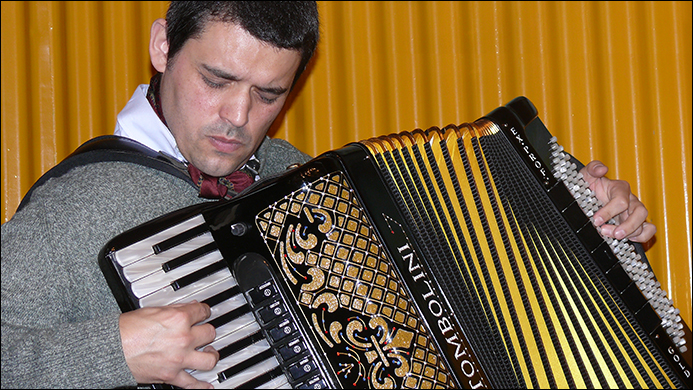
Tango has been integral to Finland for over a hundred years,and this week one of the largest tango festivals in the world kicks off again as 100,000 people descend on the town of Seinäjoki for the annual Tangomarkkinat to dance the Finnish variety of tango that developed in isolation for much of the 20th century. Find out about Finnish tango and check out Tangalo’s recent performances in Canberra this Sunday on Tango Capital, 7:00pm to 8:00pm:

Image credit: Ann Smith – Tángalo playing Smith’s Alternative in Canberra, June 2018.

PLAYLIST:

  • Alma De Bohemia, from Pedro Laurenz, recorded on 15 July 1943 with Alberto Podestá singing, a tango originally written in 1928 by Roberto Firpo and with lyrics by Juan Andres Caruso.
  • Liljankukka, meaning ‘Lily Flower’, a Finnish tango sung by Henry Theel in 1945.
  • Satumaa, meaning ‘Fairyland’; a Finnish tango sung by Reijo Taipale in 1962, and composed by Unto Mononen, a significant early composer of Finnish tango.
  • Punatukkaiselle Tytolleni, meaning ‘To My Red-Headed Girl’; composed by Olavi Virta and here sung by him in 1967.
  • Tangon Kotimaa, meaning ‘Homeland of Tango’; a Finnish tango from  Tango-orkesteri Unto, recorded in 2010 with Pirjo Aittomäki singing, composed in 1996 by Taisto Wesslin and with lyrics by Pauli Ylitalo.
  • La Yumba, a tango from Osvaldo Pugliese, written by him and then recorded by him on 26 December at the Colon Theatre in Buenos Aires.
  • Milonga Del Ángel, meaning ‘Dance Of The Angel’; recorded by Astor Piazzolla in 1985; a concierto with music composed by Astor Piazzolla in 1965.

Otros Ritmos

2018-07-07 - Foxtrot pressing by Carabelli 1927

This week features the second of a two-part special on the legacy from Argentine tango orquestas of music that is not tango. Tango evolved in the relative isolation of the 19th century, but by the 20th century steamers, recordings, and radio shattered that isolation and brought new sounds, new dances, and new instrumentation to Argentina. Astute band leaders such as Canaro, Rodriguez, and Lomuto regularly incorporated jazz instrumentation into their tango music, and they recorded many dances imported from the UK and the rest of the Americas. This is a selection of 20th century dance rhythms as interpreted by Rodriguez, including paso doble and foxtrot. That’s Tango Capital this Sunday evening from 7:00pm to 8:00pm:

Image credit:  a 1927 foxtrot pressing from Carabelli: https://www.youtube.com/watch?v=G_vGpPegEeU

PLAYLIST:

  • La Calesita Se Destrozo, meaning ‘The Carousel Was Destroyed’; recorded by Enrique Rodríguez on 10 November 1937; a foxtrot with music and lyrics composed by Cliff Friend and Dave Franklin, and sung by Roberto Flores.
  • Esa Muchacha, meaning ‘This Girl’; recorded by Enrique Rodríguez on 7 December 1955; a foxtrot with music and lyrics composed by Oscar Kinleiner, and sung by Omar Quiroz.
  • Hay Que Aprender A Bailar, meaning ‘You Have To Learn To Dance’; recorded by Enrique Rodríguez on 19 March 1957; a foxtrot with music composed by Francisco Lomuto, lyrics by Andrés Lorenzo Seitún, and sung by Omar Quiroz.
  • Frente A Frente, meaning ‘Face To Face’; recorded by Enrique Rodríguez on 11 May 1956; a foxtrot with music composed by Juan Quintero, lyrics by Quiroga, and sung by Omar Quiroz. It’s a foxtrot arrangement of Donato’s earlier classic tango.
  • La Leyenda Del Beso, meaning ‘The Legend Of The Kiss’; recorded by Enrique Rodríguez on 27 April 1956; a foxtrot with music composed by Juan Vert Carbonell and Reveriano Soutullo Otero. It’s a foxtrot arrangement of music from the 1924 Spanish operetta of the same name
  • Devuelveme Mi Corazón, meaning ‘Return My Heart’; recorded by Enrique Rodríguez on 31 July 1946; a foxtrot with music composed by José Mazzitelli, lyrics by Fernando Torres, and sung by Ricardo Herrera.
  • Pero Hay Una Melena, meaning ‘But There Is A Mane’; recorded by Enrique Rodríguez on 13 July 1953; a foxtrot with music and lyrics composed by José Bohr , and sung by Omar Quiroz. The song dates from 1924 and deplores the fashion trend of women bobbing their hair short, extolling instead a traditionally long “mane” of hair as a properly womanly appearance.
  • La Colegiala, meaning ‘The Schoolgirl’; recorded by Enrique Rodríguez on 23 March 1938; a foxtrot with music composed by Antonio Matas Mir, and sung by Roberto Flores.
  • Encantador de Serpientes, meaning ‘Snake Charmer’; recorded by Enrique Rodríguez on 5 June 1939; a foxtrot with music composed by Teddy Powell, lyrics by Leonard Whitcup, and sung by Roberto Flores.
  • Isabel; recorded by Enrique Rodríguez on 25 April 1946; a foxtrot with music composed by Adrián Russo, lyrics by Mario Battistella, and sung by Ricardo Herrera. The title is a reference to a woman of that name.
  • Titina; recorded by Enrique Rodríguez on 11 March 1955; a foxtrot with music composed by Leo Daniderff, and sung by Omar Quiroz. The title is a reference to a woman of that name.
  • Adiós Pilar; recorded by Enrique Rodríguez on 26 September 1946; a pasodoble with music composed by Manual Jovés, and sung by Fernando Reyes.
  • Castañuelas, meaning ‘Castanets’; recorded by Enrique Rodríguez on 11 July 1947; a pasodoble with music composed by Alfredo Marengo, lyrics by José A Zatzkin, and sung by Ricardo Herrera.
  • Chacarero, meaning ‘Farm Worker’; recorded by Enrique Rodríguez on 16 January 1948; a pasodoble with music composed by Filinto Rebehi and Aguariguay Alfas, lyrics by Carlos Bahr, and sung by Ricardo Herrera.
  • La Buenaventura, meaning ‘Good Fortune’; recorded by Enrique Rodríguez on 27 January 1949; a pasodoble with music composed by Ramón Montes, and sung by Ricardo Herrera.
  • El Vito; recorded by Enrique Rodríguez on 11 May 1956; a pasodoble with music composed by Sandiago Lope Gonzalo.
  • Puñal Sevillano, meaning ‘Dagger Of Seville’; recorded by Enrique Rodríguez on 19 March 1957; a pasodoble with music composed by Martin Torrellas and lyrics by A Piangarelli.
  • Oh París; recorded by Enrique Rodríguez on 21 June 1948; a foxtrot with music composed by Jose Bohr, lyrics by Juan Andres Caruso, and sung by Ricardo Herrera. The title is a reference to the city of Paris, the city that so many wealthy Argentinians visited and admired.

Ritmos de Folklórico

2018-06-21 - Folklorico in Bahia Blanca.jpg

Next episode is the first of a two-part special on the considerable legacy from Argentine tango orquestas of  music that is not tango. Canaro recorded more paso dobles and foxtrots each than he did milongas; Rogdriguez worked under the tagline of “La orquesta de todos los ritmos, ‘The orquesta of all the rhythms'” and featured jazz in his playlists; orquestas ranging from De Caro to Firpo to Lomuto, featured and recorded an array of folk rhythms including polca and ranchera, gato, and zamba; this is a selection of those traditional folk rhythms of Argentina as interpreted by some of the great tango musicians. That’s Tango Capital:

Image: Folklórico in Bahia Blanca, April 2012

PLAYLIST: 

  • Las Promesas En Amor, meaning ‘The Promises In Love’; recorded by Francisco Canaro on 13 October 1939; a ranchera with music composed by Francisco Canaro, lyrics by Ivo Pelay, and sung by Francisco Amor.
  • Maté Cocido, meaning ‘Hot Maté’; recorded by Francisco Canaro on 30 March 1939; a ranchera with music composed by Enrique N García, lyrics by Lito Bayardo, and sung by Francisco Amor. The name is a reference to yerba maté, the South America tea made from a holly bush that is steeped in a gourd and takes the place of hot coffee for many Argentinians.
  • ?Dónde Hay El Novio¿, meaning ‘Where Is The Boyfriend?’; recorded by Francisco Canaro on 13 October 1939; a ranchera with music composed by Francisco Canaro, lyrics by Ivo Pelay, and sung by Ernesto Famá.
  • El Viejito Del Acordeón, meaning ‘The Little Old Man With The Accordion’; recorded by Francisco Canaro on 12 May 1936; a polca with music and lyrics composed by José Domingo Aiello and Carmelo Aiello, and sung by Roberto Maida and Ángel Ramos.
  • La Refalosa; recorded by Francisco Canaro on 18 June 1935; a polca with music composed by Francisco Canaro, first recorded in 1928. The name is a reference to another traditional dance, the refalosa or resbalosa, this one based on the cueca and featuring a handkerchief; it was popular in Argentina in the first half of the 19th century and survived in the provinces.
  • Maté Amargo, meaning ‘Bitter Maté’; recorded by Rafael Rossi; a ranchera with music composed by Carlos F Bravo, first recorded in 1928, lyrics by Francisco Brancatti, and sung by Casadei brothers. The name is a reference to yerba maté, the South America tea made from a holly bush that was traditionally drunk without sugar or other flavourings.
  • Enamorado, meaning ‘In Love’; recorded by Pedro Laurenz in 1937; a ranchera with music composed by Pedro Laurenz, and sung by Héctor Farrel.
  • Patria Hermana , meaning ‘Sister Of The Fatherland’; recorded by Francisco Canaro on 11 September 1939; a marcha with music composed by Francisco Canaro, lyrics by Ivo Pelay, and sung by Ernesto Famá and Francisco Amor.
  • Puerto Nuevo, meaning ‘New Port’; recorded by Francisco Canaro on 18 March 1936; a marcha with music composed by Hans Diernhammer, first recorded in 1935, lyrics by Luis César Amadori, and sung by Roberto Maida. The name is a reference to the major works to move the docking facilities from various sites including La Boca to the current location north of Retiro. The works commenced in 1911 and when completed in 1928 the port was the largest in the Southern Hemisphere.
  • El 180; recorded by Julia Vidal in 1952; a gato with music composed by Alberto Acuña, Andres Chazzareta, and Rene Ruiz, and sung by Julia Vidal.
  • El Sol Del 25, meaning ‘The Sun Of 25’; recorded by Francisco Lomuto on 9 May 1939; a gato with music composed by Carlos Gardel and José Razzano, first recorded in 1917, lyrics by Domingo V Lombardi, and sung by Fernando Díaz and Jorge Omar. The name is a reference to the sun of the Argentine flag rising over the Rio De La Plata in a military context; in 1825 the United Kingdom recognised Argentinian independence, and the war that led to the secession of Uruguay commenced. This was a very popular song that year; Francisco Canaro also recorded it just a fortnight later, on 22 May 1939.
  • La Tia Renuncia; recorded by Elba Berón in 1956 with guest artist Francisco Tropoli on piano; a chamamé with music composed by Juan Carlos Mareco, lyrics by José Maria Pilepich, and sung by Elba Berón.
  • El Niño De Las Monjas, meaning ‘The Child of The Nuns’; recorded by Rafael Rossi; a pasodoble sung by Casadei brothers.
  • Paquiya; recorded by Francisco Canaro on 17 July 1936; a pasodoble with music and lyrics composed by Héctor Lomuto, and sung by Roberto Maida.
  • A La Huaca China; meaning ‘To The Inca Woman’, recorded by Francisco Canaro on 27 February 1939; a pasodoble with music composed by Francisco Pérez Anampa, first recorded in 1938, lyrics by Carlos Saco Herrera, and sung by Francisco Amor. The name is not a reference to the famous oasis of Huacachina in the Peruvian desert sands; here the term “Huaca” refers to the beliefs and ideology of the Inca people who controlled the Andes in the west of Argentina, whilst “China” refers to an indigenous woman.
  • Mariana; recorded by Francisco Canaro on 4 May 1939; a pasodoble with music and lyrics composed by Alejandro Gutiérrez Del Barrio, and sung by Ernesto Famá. The name is a reference to a woman’s name.
  • Argentina, meaning ‘Argentina’; recorded by Francisco Canaro on 8 November 1937; a ranchera with music and lyrics composed by Héctor Lomuto, and sung by Roberto Maida.

Canyengue

2018-06-17 - Canyengue

Consistent with modern Buenos Aires usage the word may be pronounced Kan-zjéng-ay . But if you listen to a lot of early (pre-1940’s) singing of tango, the yeisma sounds more often like a Y than taking the modern ‘zh’ sound, so it probably was originally pronounced Can-yen-gue . Certainly this pronunciation is consistent with some of what we know of its early history. It was popular in the suburban districts of Buenos Aires from around 1900, perhaps 1890. In Lunfardo (Buenos Aires slang) the word implies ‘rough’, ‘of low social standing’ but its origins may be in a dance call in Ki-Kongo, an Afro-American language of Buenos Aires at the time—kanienge is a call to ‘Melt into the music!’ ‘Rhythmical walking’ is Marta Anton’s translation, or it may mean ‘lilting walk’. It was just one of the couple dances such as milonga that emerged in the same milieu. Afro-Argentine culture, the polka, and knife-fighting almost certainly contributed to it, but the precise mix of African, European, and Argentine influences and social circumstances that formed it is now lost. What we do know from photos is that this dance, the tango canyengue – rough tango – the tango of the orilleros, or outer lower-class suburbs – was what went to Paris in 1912 and took the world by storm over the following few years. This week features Canyengue from a series of orquestas exploring how it evolved from the very late 1920s onwards. That’s Tango Capital this Sunday evening from 7:00pm to 8:00pm:

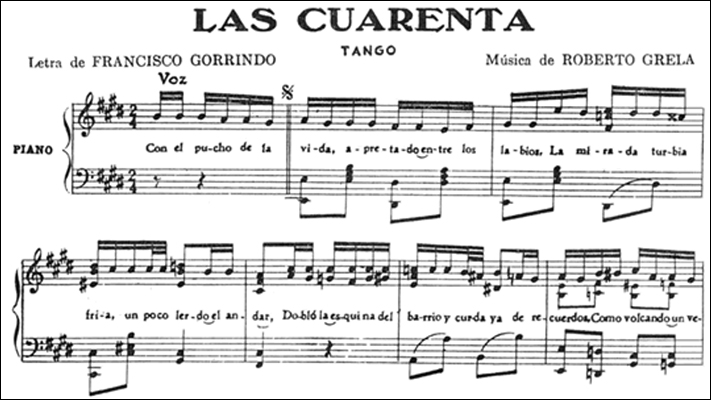
Image: http://www.todotango.com/musica/tema/134/Las-cuarenta/

The name Las Cuarenta means  (roughly) ‘Years of the 40s’. This piece was written in 1937, long after tango had mutated into tango liso and then salon tango. This was the music of “el dos”, meaning “the two”, that is, in 2/4 time, with the distinctive quick-quick-slow rhythm played on the left hand of the piano particularly clear in bars 3 and 4.

PLAYLIST:

  •  Copo De Nieve , meaning ‘Snowflake’; recorded by Francisco Canaro on 20 July 1937; a canyengue with music composed by Raúl Cuello Rodríguez, lyrics by Denrique Miguel Gaudino, and sung by Roberto Maida.
  • No Cantes Ese Tango, meaning ‘Do Not Sing That Tango’; recorded by Francisco Canaro on 27 May 1937; a canyengue with music composed by Francisco Lomuto in 1937, lyrics by Rodolfo Blas Arrigorriaga, and sung by Roberto Maida.
  • Que Nadie Se Entere, meaning ‘Nobody Knows’; recorded by Francisco Canaro on 23 February 1937; a canyengue with music and lyrics composed by Alberto Gómez in 1936, and sung by Roberto Maida.
  • Nueve De Julio, meaning ‘Ninth Of July’; recorded by Cuarteto Guardia Vieja in 2005; a canyengue with music composed by José Luis Padula, first recorded in 1916 and lyrics by Lito Bayardo. The name is a reference to the annual celebration of Argentina’s independence.
  • Jueves, meaning ‘Thursday’; recorded by Cuarteto Guardia Vieja in 2005; a canyengue with music composed by Rafael Rossi, first recorded in 1919 and lyrics by Udelino Toranzo.
  • Cantando, meaning ‘Singing’; recorded by Adolfo Carabelli on 4 September 1931; a canyengue with music and lyrics composed by Mercedes Simone in 1931, and sung by Mercedes Simone and Alberto Gómez (Nico).
  • Mentira, meaning ‘Lie’; recorded by Adolfo Carabelli on 2 October 1931; a canyengue with music composed by Francisco Pracánico, first recorded in 1930, lyrics by Celadonio Flores, and sung by Carlos Lafuente.
  • Porqué, meaning ‘Why?’; recorded by Adolfo Carabelli on 2 November 1931; a canyengue with music composed by Osvaldo Fresedo in 1931, lyrics by Emilo Augusto Oscar Fresedo, and sung by Alberto Gómez (Nico).
  • Sentimiento Criollo, meaning ‘Argentine Feeling’; recorded by Roberto Firpo on 31 March 1939; a canyengue with music composed by Roberto Firpo, first recorded in 1913 and lyrics by Domingo V Lombardi.
  • El Horizonte, meaning ‘The Horizon’; composed by Roberto Firpo and recorded by him on 23 May 1938.
  • Matasano, from lunfardo, meaning ‘Doctor’; recorded by Roberto Firpo on 4 July 1937; a canyengue with music composed by Francisco Canaro in 1914.
  • El Chamuyo, meaning ‘The Chat’; recorded by Orquesta Típica Victor on 26 June 1930; a canyengue with music composed by Francisco Canaro, first recorded in 1918.
  • Filo Misho, from lunfardo, meaning ‘Poor Man’s Cash’; recorded by Orquesta Típica Victor on 8 May 1930; a canyengue with music composed by Marcos Larrosa.
  • Recuerdo, meaning ‘Memory’; recorded by Orquesta Típica Victor on 23 April 1930; a canyengue with music composed by Osvaldo Pugliese in 1924, lyrics by Eduardo Moreno, and sung by Roberto Díaz.
  • Hotel Victoria, meaning ‘Hotel Victoria’; recorded by La Tubatango in 2006; a canyengue with music composed by Feliciano Latasa in 1906 and lyrics by Carlos Pesce.
  • Pimienta, meaning ‘Pepper’; recorded by La Tubatango in 2006; a canyengue with music composed by Osvaldo Fresedo, first recorded in 1939.
  • Las Cuarenta, meaning ‘The Decade Of The Fourties’; recorded by Francisco Lomuto on 30 July 1937; a canyengue with music composed by Roberto Grela, lyrics by Francisco Gorrindo, and sung by Jorge Omar.
  • Otra Vez, meaning ‘Another Time’; recorded by Francisco Lomuto on 9 June 1938; a canyengue with music composed by Jorge Fernández, lyrics by José María Contursi, and sung by Jorge Omar.


Milonga

2018-06-07 - Milonga.JPG

This week features another in a series of editions exploring the evolution of the various different rhythms of tango. Unlike the European vals, milonga owed its roots to Africa, its distinguishing feature the liliting rise-and-fall of the habanero rhythm that entered the Americas with the slave trade in the Caribbean. Think of “La Paloma”, one of the most famous and well-known habaneras; it was written in 1861 by a Spanish composer, Sebastián Yradier on a visit to Cuba, but by then the rhythm had already established itself in Argentina – perhaps brought by the slaves introduced into Argentina earlier. It was omnipresent in Buenos Aires in the later parts of the 19th century, emerging from street organs, a staple of the itinerant musicians and unemployed workers, a fixture at the suburban dances. It was one of the many influences shaping the song and dance that would eventually become known as tango, but the milonga has survived alongside it. This week features milonga from a series of orquestas exploring how milonga evolved over the two decades from 1933. That’s Tango Capital this Sunday evening from 7:00pm to 8:00pm:

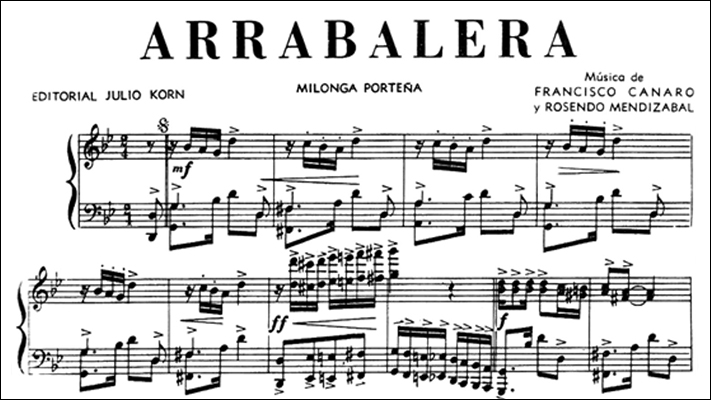
Image: http://www.todotango.com/musica/tema/5106/Arrabalera-%5Bb%5D/

Milonga Porteña means ‘Milonga of  Buenos Aires’, and the name Arrabalera means  (roughly) ‘Woman of the Working Class suburbs’. Milonga has survived as a dance in its own right and this piece was written in 1938, long after tango had evolved out of milonga. The distinctive rise-and-fall pattern with the lengthened first note is clearly shown on the lower stave, where the left hand will play it on the piano.

PLAYLIST:

  •  Mi Buenos Aires, meaning ‘My Buenos Aires’; recorded by Francisco Canaro on 7 October 1933; a milonga with music composed by Francisco Rofrano in 1893 and lyrics by Elisardo Besada. It’s also known as “Milonga De Hoy”, Milonga of Today.
  • Milonga Sentimental, meaning ‘Sentimental Milonga’; recorded by Francisco Canaro on 9 February 1933; a milonga with music composed by Sebastián Piana in 1932, lyrics by Homero Manzi, and sung by Ernesto Famá and Ángel Ramos.
  • Milonga Compadre, meaning ‘Mate’s Milonga’; recorded by Pedro Laurenz on 12 May 1938; a milonga with music composed by José Mastro in 1915, lyrics by Carlos Bahr, and sung by Juan Carlos Casas.
  • La Vida Es Una Milonga, meaning ‘Life Is A Milonga’; recorded by Pedro Laurenz on 5 September 1941; a milonga with music composed by Fernando Montoni, lyrics by Rodolfo Sciammarella, and sung by Martín Podestá. The name is a reference to the compadritos, the displaced gauchos that drifted to Buenos Aires in search of work.
  • Campo Afuera, meaning ‘Outside’; recorded by Rodolfo Biagi on 27 April 1939; a milonga with music composed by Rodolfo Biagi in 1939, lyrics by Homero Manzi, and sung by Teófilo Ibáñez.
  • Picante, meaning ‘Spicy’; recorded by Rodolfo Biagi on 21 Octobeer 1941; a milonga with music composed by José Luis Padula.
  • El Naranjerito, meaning ‘The Little Orange Tree’; recorded by Lucio Demare on 14 April 1942; a milonga with music composed by Alberto Nery and Héctor Varela, lyrics by Homero Expósito, and sung by Juan Carlos Miranda. It’s also known as Pregón.
  • Milonga En Rojo, meaning ‘Milonga In Red’; recorded by Lucio Demare on 3 September 1942; a milonga with music composed by Lucio Demare and Roberto Fugazot, lyrics by José González Castillo (Juan de León), and sung by Juan Carlos Miranda.
  • Pena Mulata, meaning ‘Sad Afro-Argentine Woman’; recorded by Roberto Firpo on 16 June 1941; a milonga with music composed by Sebastián Piana in 1941 and lyrics by Homero Manzi. It’s from Firpo’s Cuarteto
  • El Lloron, meaning ‘The Weeping Man’; recorded by Roberto Firpo on 2 June 1944; a milonga with music composed by Juan Félix Maglio in 1933 and lyrics by Enrique Cadícamo. It’s from Firpo’s Cuarteto
  • Azabache, meaning ‘Black’; recorded by Miguel Caló on 29 September 1942; a candombe with music composed by Enrique Francini and Héctor Stamponi, lyrics by Homero Expósito, and sung by Raúl Berón.
  • Milonga Que Peina Canas, meaning ‘Milonga Of The Grey-Haired’; recorded by Miguel Caló on 9 September 1932; a milonga with music and lyrics composed by Alberto Gómez in 1942, and sung by Raúl Berón. The name is a reference to an ornamental comb (peina) holding back a woman’s greyed hair.
  • Milonga De Mi Tierra, meaning ‘Milonga Of My Land’; recorded by Osvalddo Pugliese on 21 October 1943; a milonga with music composed by Alberto Pugliese, lyrics by José Sassone, and sung by Jorge Rubino.
  • Tortazos, meaning ‘Blows’; recorded by Osvalddo Pugliese on 1 June 1944; a milonga with music composed by José Razzano in 1930, lyrics by Enrique Maroni, and sung by Roberto Chanel. The name is a reference to a series of blows or knocks in a fight.
  • Así Me Gusta A Mí, meaning ‘That’s The Way I Like It’; recorded by Ángel D’Agostino on 17 November 1942; a milonga with music composed by Ángel D’Agostino, lyrics by José Barreiros Bazán, and sung by Ángel Vargas.
  • Señores, Yo Soy Del Centro, meaning ‘Gentlemen, I Am Of The Centre’; recorded by Ángel D’Agostino on 20 March 1945; a milonga with music composed by Armando Baliotti, first recorded in 1944, lyrics by Santiago Luis D Adamini, and sung by Ángel Vargas. The name is a reference to the central part of Buenos Aires, around Corrientes St, and a centre for tango in the 1940s.
  • Cuando Te Hablen Del Domingo, meaning ‘When They Talk To You About Sunday’; recorded by Enrique Rodríguez on 18 January 1945; a milonga with music composed by Julián Ortiz, lyrics by Luis Justino Mejías, and sung by 18 January 1945.
  • Juan Palomo; recorded by Enrique Rodríguez on 22 May 1946; a milonga with music composed by Enrique Rodríguez, lyrics by Carlos Goicoechea and Rogelio Cordone, and sung by Ricardo Herrera and Fernando Reyes. “Juan Palomo” is the name of the character talking in the lyrics
  • Taquito Militar, meaning “Military Heels” ; recorded by the orquesta of Enrique Francini and Armando Pontier on 7 December 1953; a milonga with music composed by Mariano Mores.


Vals

2018-06-02 - Desde El Alma - Detail

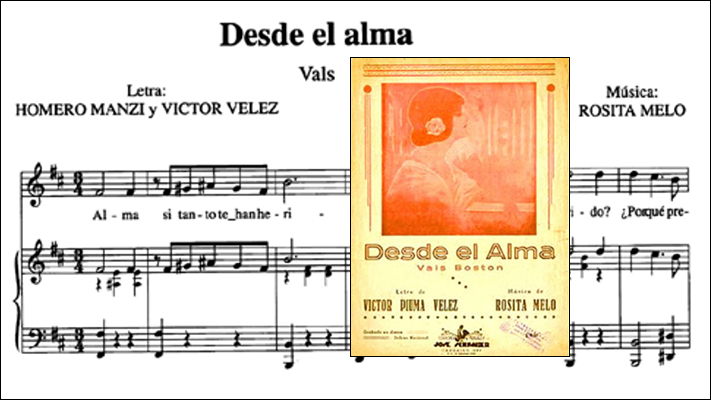
There are all sorts of views on the role of vals in tango. Waltz was the scandalous dance of the early 19th century that slipped quietly into respectability after a couple of generations, so much so that a 14 year old girl could write the most popular vals of all time – Desde El Alma. Musicians say when the equally scandalous tango developed in Buenos Aires, vals was played by tango bands as a smokescreen when the moral police came around. This all meant that there was an early tradition of vals, and so when D’Arienzo re-invigorated tango music generally in 1935, he made the infectiously danceable vals part of the package – leading to an explosion of valses from many different orquestas over the following decade. This week features valses from a series of orquestas  exploring how vals evolved from the very late 1920s onwards. That’s Tango Capital this Sunday evening from 7:00pm to 8:00pm:

Image: http://www.todotango.com/historias/cronica/183/Desde-el-alma-Desde-el-alma-un-vals-criollo-y-romantico/

PLAYLIST:

  •  Amor Y Celos, meaning ‘Love And Passion’; recorded by Francisco Lomuto on 30 September 1930; a vals with music composed by Miguel Padula, first recorded in 1928, and lyrics by Alfredo Faustino Roldán.
  • A Su Memoria, meaning ‘To Your Memory’; recorded by Francisco Lomuto on 1 October 1931; a vals with music composed by Antonio Sureda, first recorded in 1927, lyrics by Homero Manzi, and sung by Anselmo Hilarion Acuña and Fernando Diaz.
  • Muy Lindo, meaning ‘Very Beautiful’; recorded by Francisco Canaro on 3 December 1938; a vals with music composed by Émile Charles Waldteufel, first recorded in 1932. Also known as Très Jolie.
  • Francia, meaning ‘France’; recorded by Francisco Cana on 7 June 1943; a vals with music composed by Octavio Barbero, first recorded in 1935 and lyrics by Carlos Pesce. It’s from Canaro’s Pirincho Quintet.
  • Salud, Dinero, Y Amor, meaning ‘Health, Money, and Love’; recorded by Enrique Rodriquéz on 25 July 1939; a vals with music and lyrics composed by Rodolfo Sciammarella, and sung by Roberto Flores.
  • Tengo Mil Novias, meaning ‘I Have A Thousand Girlfriends’; recorded by Enrique Rodriquéz on 10 October 1939; a vals with music composed by Enrique Rodriguéz, lyrics by Enrique Cadícamo, and sung by Roberto Flores.
  • Ribereña, meaning ‘Riverbank’; recorded by Lucio Demare on 13 March 1942; a vals with music composed by Victor Braña and Santiago Coppola, lyrics by Enrique Miguel Gaudino, and sung by Juan Carlos Miranda.
  • Entrelazando Los Corazones, meaning ‘The Hearts Entwining’; recorded by Lucio Demare in 1944; a vals with music and lyrics composed by Georgina Vargas, and sung by Horacio Quintana.
  • Pájaro Herido, meaning ‘Wounded Bird’; recorded by Rodolfo Biagi on 7 October 1941; a vals with music composed by Esteban A Parma and Amadeo Faffo and lyrics by Guillermo Naccarelle.
  • Amor Y Vals, meaning ‘Love And Waltz’; recorded by Rodolfo Biagi on 22 May 1942; a vals with music composed by Rodolfo Biagi, lyrics by Carlos Bahr, and sung by Alberto Lago.
  • Flor De Lino, meaning ‘Flower Of Flax’; recorded by Miguel Caló on 3 Devember 1946; a vals with music composed by Héctor Stamponi, lyrics by Homero Expósito, and sung by Raúl Iriate.
  • Manos Adoradas, meaning ‘Adorable Hands’; recorded by Miguel Caló on 3 October 1952; a vals with music composed by Roberto Rufio, first recorded in 1951, lyrics by Horacio Sanguinetti, and sung by Juan Carlos Fabri.
  • Mascarita, meaning ‘Little Mask’; recorded by Pedro Laurenz on 21 February 1940; a vals with music composed by Pedro Laurenz, lyrics by Enrique Cadícamo, and sung by Alberto Podestá.
  • Paisaje, meaning ‘Landscape’; recorded by Pedro Laurenz on 6 August 1943; a vals with music composed by Sebastián Piana, lyrics by Homero Manzi, and sung by Juan Carlos Casas.
  • A Mi Madre, meaning ‘To My Mother’; recorded by Francini-Pontier on 10 May 1948; a vals with music and lyrics composed by Francisco Peña, first recorded in 1928, and sung by Roberto Rufino.
  • Las Rosas De Mi Madre, meaning ‘The Roses Of My Mother’; recorded by Francini-Pontier on 19 January 1956; a vals with music composed by Enrique Francini, first recorded in 1956, lyrics by María Ester M. de Carnevale, and sung by Alberto Podestá.
  • Ilusión Marina, meaning ‘Sea Dream’; recorded by Osvaldo Pugliese on 28 January 1947; a vals with music composed by Antonio Sureda, first recorded in 1930, lyrics by Gerónimo Sureda, and sung by Alberto Morán.
  • Dos Que Se Aman, meaning ‘Two That Love Each Other’; recorded by Osvaldo Pugliese on 15 September 1948; a vals with music composed by Antonio Torno, lyrics by Manuel Maria Flores, and sung by Alberto Morán.