The Australian Tango Academy – Tango Together

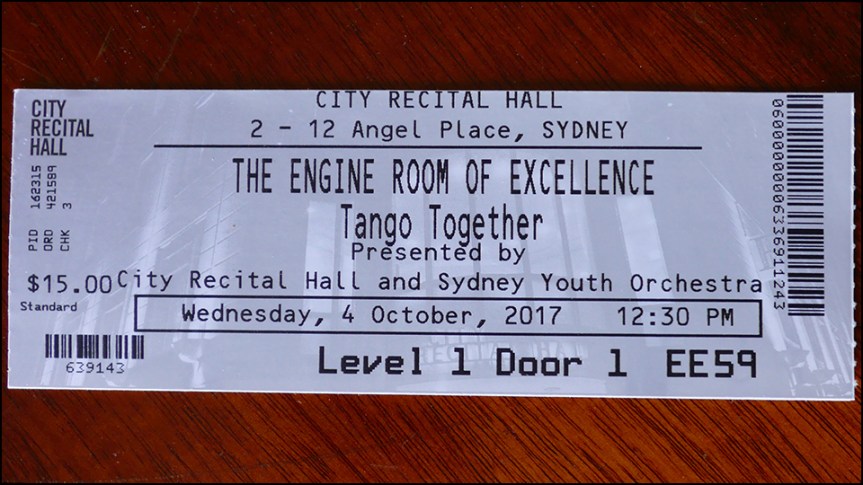
2017-10-12 - ATA Ticket

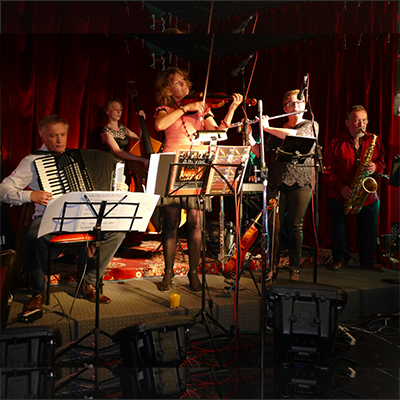
The Australian Tango Academy is supported by the Sydney Youth Orchestra, and a report on their recent recital and then Raúl Iriarte feature before continuation of the interview with Chloe Williamson and Stephen Cutriss of Mendoza Tango Quartet.

Note: I should add that Madeleine Easton stepped in as first violin for the ATA for the performance I attended.

That’s Tango Capital, Sunday evening from 7:00pm to 8:00pm:

PLAYLIST:

  • Nada, meaning ‘Nothing’; it’s a tango recorded by Miguel Caló on 9 March 1944 with music composed by José Dames in 1944, lyrics by Horacio Sanguinetti and sung by Raúl Iriarte.
  • Mañana Iré Temprano, meaning ‘I’ll Go Early Tomorrow’; it’s a tango recorded by Miguel Caló on 10 August 1943, with music composed by Enrique Francini in 1943, lyrics by Carlos Bahr and sung by Raúl Iriarte.
  • Es En Vano Llorar, meaning ‘It Is Useless To Cry’; it’s a tango recorded by Miguel Caló on 17 May 1943, with music composed by Alberto Suárez Villanueva, lyrics by Oscar Rubens and sung by Raúl Iriarte.
  • Óyeme, meaning ‘Hear Me’; it’s a tango recorded by Miguel Caló on 22 October 1947, with music composed by Enrique Francini in 1947, lyrics by Homero Expósito and sung by Raúl Iriarte.
  • La Payanca from the ‘Good Enough For Gringos’ release from Tángalo in 2013, the name a reference to a person—probably a woman—from Estancia La Payanca in Córdoba province; it’s a tango composed by August Pedro Berto in 1926 with lyrics by Jesús Fernández Blanco.
  • Adiós Pampa Mía, meaning ‘Good-Bye, My Pampa’; it’s a tango recorded by El Arranque in 2002, with music and lyrics by Francisco Canaro, Mariano Mores, and Ivo Pelay in 1945.
  • Yunta De Oro, meaning ‘Team Of Gold’; it’s a tango recorded by Osvaldo Pugliese on 25 October 1957 with music composed by Osvaldo Ruggiero.
  • Bahia Blanca, meaning ‘White Bay’, the name a reference to the city where Carlos Di Sarli was born; it’s a tango composed by Di Sarli and recorded by him on 21 November 1957.

José Basso – the music

Pianist, orquesta leader, composer, businessman, and game show expert—that was the José Basso introduced in the last episode. This episode features singing with two of his many excellent singers, Floreal Ruiz and Oscar Ferrari—with a little help from Jorge Durán. That’s Tango Capital, Sunday evening from 7:00pm to 8:00pm:


2017-10-05 - Jose Basso

PLAYLIST:

  • Venganza, meaning ‘Revenge’; it’s a tango recorded by José Basso on 20 January 1950, music and lyrics by Luis Rubistein, first recorded in 1934 and sung here by Oscar Ferrari.
  • Mi Vieja Viola, meaning ‘My Old Viola’; it’s a tango recorded by José Basso on 17 November 1950, with music composed by Humbero Correa in 1950, lyrics by Humberto Correa and Salvador Frías and sung by Oscar Ferrari.
  • Galleguita, meaning ‘Spanish Girl’; it’s a tango recorded by José Basso on 27 June 1950, with music composed by Horacio Perrorossi in 1924, lyrics by Alfredo Navarrine and sung by Oscar Ferrari.
  • Payada Criolla, meaning ‘Creole Improv’, the name a reference to the rural folk art of spoken and musical improvisation that was one of the early influences on the development of tango; it’s a milonga recorded by José Basso on 17 November 1950, with music composed by José Basso, lyrics by Enrique Maroni and sung by Jorge Durán and Oscar Ferrari.
  • Sábado Inglés, meaning ‘Saturday Holiday’; it’s a tango recorded by José Basso on 9 December 1953, first recorded in 1920 with music composed by Juan Félix Maglio and lyrics by Eugenio Cárdenas.
  • Sentimiento Gaucho, meaning ‘Sentimental Gaucho’; it’s a tango recorded by José Basso on 23 December 1955, with music composed by Francisco Canaro and Rafael Canaro in 1924, lyrics by Juan Andrés Caruso and sung here by Oscar Ferrari.
  • Cuando Muere El Corazón, meaning ‘When The Heart Dies’; it’s a tango recorded by José Basso on 23 December 1955, with music composed by Juan Carlos Bera lyrics by Antonio Chidichimo and sung by Oscar Ferrari.
  • La Maleva, meaning ‘Rough Woman’; it’s a tango recorded by José Basso on 19 April 1955, with music composed by Andonio Buglione in 1922, lyrics by Mario Alberto Pardo and sung by Floreal Ruíz.
  • Y Todavia Te Quiero, meaning ‘I Love You Always’; it’s a tango recorded by José Basso on 11 June 1956, with music composed by Luciano Leocata in 1956, lyrics by Abel Aznar and sung by Floreal Ruíz.
  • A La Mujer Argentina, meaning ‘To An Argentinian Woman’; it’s a tango recorded by José Basso on 26 July 1956, first recorded in 1955 with music composed by Alejandro Romay, lyrics by Roberto Giménez and here sung by Floreal Ruíz.
  • Mundana, meaning ‘Worldly Woman’; it’s a tango recorded by José Basso on 29 November 1956, with music composed by José Basso and Floreal Ruíz, lyrics by Manuel Barros and sung by Floreal Ruíz.
  • El Peluquero, meaning ‘The Barber’; it’s a milonga recorded by José Basso on 21 July 1959, music and lyrics by Alberto Mastra and sung by Floreal Ruíz.
  • Pajaro Azul, meaning ‘Bluebird’; it’s an instrumental tango recorded by José Basso on 8 January 1959, with music composed by Francisco Canaro, first recorded in 1928.
  • Amurado, meaning ‘Left’ (from lunfardo); it’s an tango recorded by José Basso on 8 January 1959, with music composed by Pedro Maffia and Pedro Laurenz in 1926 and lyrics by José Pedro de Grandis.
  • Tu Beso Y Nada Más, meaning ‘Your Kiss And Nothing More’; it’s a tango recorded by José Basso on 14 April 1961, with music composed by Ángel Cabral and José Basso, lyrics by Floreal Ruíz and here sung by Floreal Ruíz.
  • El Viejo Amor, meaning ‘The Old Love’; it’s a tango recorded by José Basso on 18 April 1961, with music composed by José Tinelli, lyrics by Alejandro Romay and sung by Floreal Ruíz.
  • Lo Han Visto Con Otra, meaning ‘They Have Seen Him With Another’; it’s a tango recorded by José Basso on 18 May 1961, first recorded in 1928 with music and lyrics by Horacio Perrorossi, and here sung by Floreal Ruíz.
  • Ronda De Ensueño, meaning ‘Fantasy Circle’; it’s a vals recorded by José Basso on 6 May 1952, with music composed by Iosif Ivanovici, lyrics by Raúl Capablanca, and sung in duet by Jorge Durán and Oscar Ferrari.


Alturas – Tango meets Jazz


In Spanish, Alturas is a musical term referring to pitch, and more generally to ‘the highest’, and Alturas  took us high at their recent performance at Django’s in Sydney. Jose Basso kicks off the program before a brief report on Alturas’ style of tango/jazz, and (after a technical hitch last week) Chloe Williamson and Stephen Cutriss of Mendoza Tango Quartet finish the program with a replay of part 1 of their interview. That’s Tango Capital, Sunday evening from 7:00pm to 8:00pm

e2017-09-28 - Alturas

Image: Alturas at Djangos, Marrickville, Sydney on 17 September 2017; Daniel Rojas is there on piano, lit in green – unfortunately I could not find a location in the venue from which to take an image that showed all the band clearly.

PLAYLIST:

  • Ahí Va El Dulce, meaning ‘There Goes The Sweet’; it’s a tango recorded by José Basso on 14 May 1958 with music composed by Juan Canaro, first recorded in 1927 and with lyrics by Osvaldo Sosa Cordero.
  • Tabernero, meaning ‘Bartender’; it’s a tango recorded by José Basso on 27 May 1949 with music composed by Miguel Cafre and Fausto Frontera, first recorded in 1926, with lyrics by Raúl Costa Olivieri and sung by Francisco Fiorentino.
  • Piropos, meaning ‘Catcalls’; it’s a tango recorded by Anibal Troilo on 11 April 1944, with music composed by Juan Carlos Cobián, first recorded in 1923, and lyrics by Enrique Cadícamo.
  • Pena, Copa Y Tango, meaning ‘Sadness, Drink, and Tango’; it’s a tango recorded by José Basso on 9 December 1953, with music composed by José Basso and with lyrics by Mario Núñez Diaz here sung by Oscar Ferrari.
  • Taquito Militar from the ‘Sin Palabras’ release in 2015, meaning ‘Military Tactic’; composed by Mariano Mores in 1952 this is a tango-jazz recording by Alturas in 2015.
  • Café con Limón from the ‘Café con Tango’ release in 2013, meaning ‘Coffee with Lemon’; it’s a tango-jazz composed by Bob Marnes and here recorded by Alturas in 2013.
  • Contrabajeando, meaning ‘Playing The Double Bass’; it’s a tango recorded by Sexteto Mayor in 2008 music composed by Astor Piazzolla and Anibal Troilo.
  • Qué Bien Te Queda, meaning ‘Good That You Have Left’; it’s a tango recorded by Ricardo Tanturi; on 5 October 1943 with music composed by Vicente Salerno and lyrics by Juan Florencio Mazaroni here sung by Enrique Campos.

Jorge Maciel – the singing

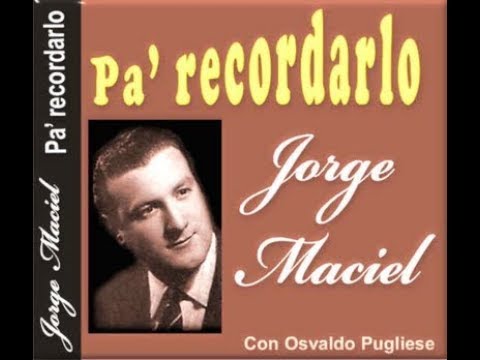
Jorge Maciel

After a brief introduction to the life and untimely death of Jorge Maciel last edition, this editions features his singing over the decade 1949 to 1959, with Gobbi (the younger) and then with Pugliese.


That’s Tango Capital, Sunday evening from 7:00pm to 8:00pm:

Image Credit: https://i.ytimg.com/vi/xhc59Y3CkHQ/hqdefault.jpg

PLAYLIST:

  • El Pollero, meaning ‘The Poultry Seller’; a tango recorded by Alfredo J Gobbi; on 24 March 1949 music and lyrics by Héctor Marcó in 1949 and sung by  Jorge Maciel.
  • Sombras, meaning ‘Shadows’; a tango recorded by Alfredo J Gobbi; on 21 December 1949 with music composed by Francisco Pracánico in 1924 lyrics by Verminio Servetto and sung by  Jorge Maciel.
  • Estás En Mi Corazón, meaning ‘You Are In My Heart’; a tango recorded by Alfredo J Gobbi; on 18 April 1950 with music composed by Antonio Blanco lyrics by Julio Camilloni and sung by  Jorge Maciel.
  • La Intriga, meaning ‘The Intrigue’; a tango recorded by Alfredo J Gobbi; on 23 November 1950 with music composed by Héctor Stamponi in 1950 lyrics by Héctor Marcó and sung by  Jorge Maciel.
  • Salto Mortal, meaning ‘Mortal Leap’; a tango recorded by Alfredo J Gobbi; on 31 October 1950 with music composed by Domingo Julio Vivas, first recorded in 1927 lyrics by Juan Florencio Mazaroni and sung by  Jorge Maciel.
  • Ya No Eres Mia, meaning ‘You Are Not Mine Anymore’; a tango recorded by Alfredo J Gobbi; on 27 March 1950 music and lyrics by Héctor Marcó and sung by  Jorge Maciel.
  • La Vieja Serenata, meaning ‘The Old Serenade’; a vals recorded by Alfredo J Gobbi; on 31 January 1949 with music composed by Teofilo Ibáñez lyrics by Sandalia Gómez and sung by  Jorge Maciel.
  • Como Las Margaritas, meaning ‘Like The Daisies’; a vals recorded by Alfredo J Gobbi; on 3 April 1952 with music composed by Héctor Gentile lyrics by José Rótulo and sung by  Jorge Maciel.
  • Calor De Hogar, meaning ‘Warmth Of Home’; a tango recorded by Alfredo J Gobbi; on 26 June 1951 with music composed by Eugenio Carrere, first recorded in 1929 lyrics by Jesús Fernández Blanco and sung by  Jorge Maciel.
  • La Número Cinco, meaning ‘The Number Five’; a tango recorded by Alfredo J Gobbi; on 27 June 1951 with music composed by Orestes Cúfaro lyrics by Reinaldo Yiso and sung by  Jorge Maciel.
  • Para Qué Vivir Así, meaning ‘To Live This Way’; a tango recorded by Alfredo J Gobbi; on 9 June 1953 with music composed by Luciano Leocata, first recorded in 1951 lyrics by Reinaldo Yiso and sung by  Jorge Maciel.
  • Un Regalo De Reyes, meaning ‘A Gift Of Kings’; a tango recorded by Alfredo J Gobbi; on 26 August 1954 with music composed by Francisco Mamone in 1952 lyrics by Reinaldo Yiso and sung by  Jorge Maciel.
  • Un Tango Para El Recuerdo, meaning ‘A Tango For Memory’s Sake’; a tango recorded by Osvaldo Pugliese; on 24 June 1957 with music composed by Rafael Del Bagno, first recorded in 1956 lyrics by Antonio Cantó and sung by  Jorge Maciel.
  • Adiós Corazón, meaning ‘Good-bye, Heart’; a tango recorded by Osvaldo Pugliese; on 29 May 1958 with music composed by Lalo Etchegoncelay, first recorded in 1957 lyrics by Héctor Sapelli and sung by  Jorge Maciel.
  • La Cumparsita, meaning ‘The Little March’; a tango recorded by Osvaldo Pugliese; on 6 August 1959 with music composed by Gerado Matos Rodríguez in 1924 lyrics by Pascual Contursi, Enrique Maroni, and Gerado Matos Rodríguez and sung by  Jorge Maciel and Carlos Guido (recitando).
  • Remembranzas, meaning ‘Remembrances’; a tango recorded by Osvaldo Pugliese; on 4 July 1956 with music composed by Mario Melfi, first recorded in 1934 lyrics by Mario Battistella and sung by  Jorge Maciel.

Talking with Mendoza Tango Quartet

2017-10-12 - Chloe Williamson & Stephen Cutriss 30 September 2017 - AMRAP

An interview with Chloe Williamson and Stephen Cutriss of Mendoza Tango Quartet starts, and there is an introduction to the singing and early death of Jorge Maciel.

Well, actually, no: the gremlins struck, and the interview will recommence in October 2017. I do apologise.

But you can listen to that interview with Chloe Williamson and Stephen Cutriss here:

Image: Chloe Williamson and Stephen Cutriss of Mendoza Tango Quartet, after playing in the Australian Tango Orquesta on 30 September 2017.

PLAYLIST:

  • Remembranza, meaning ‘Remembrances’; a tango recorded by Alfredo J Gobbi on 8 September 1948, with music composed by Mario Melfi in 1934, lyrics by Mario Battistella and sung by Jorge Maciel.
  • La Vieja Serenata, meaning ‘The Old Serenade’; a vals recorded by Alfredo J Gobbi in 1949, with music composed by Teofilo Ibáñez, lyrics by Sandalia Gómez and sung by Jorge Maciel.
  • Tropa, from the lunfardo meaning ‘Crowd’, it’s a tango recorded by Alfredo J Gobbi on 31 October 1950, with music composed by Ángel Raúl Vilar, lyrics by Pedro Blasco and sung by Jorge Maciel and Héctor Coral.
  • Silueta Porteña, meaning ‘Shadow of a Woman from Buenos Aires’; a milonga recorded by Osvaldo Pugliese on 2 August 1956; music composed by Nicolas Luis Cuccaro and Juan Ventura Cuccaro in 1936, lyrics by Orlando D’Aniello and Ernesto Noli and sung by Jorge Maciel and Miguel Montero.
  • Adiós Corazón, meaning ‘Good-bye, Heart’; a tango recorded by Osvaldo Pugliese on 29 May 1958; with music composed by Lalo Etchegoncelay first recorded in 1957, lyrics by Héctor Sapelli and sung by Jorge Maciel.
  • De Antaño from the ‘Good Enough For Gringos’ release in 2013, meaning ‘Of Days Gone By’; a milonga recorded by Tángalo with music and lyrics by Luis Rubistein in 1939, and sung here by Susie Bishop.
  • Adiós Pampa Mia, meaning ‘Good-bye, My Pampa’; a tango recorded by El Arranque in 2002; music and lyrics by Francisco Canaro, Mariano Mores, and Ivo Pelay in 1945.
  • Contrabajeando, meaning ‘Playing The Double Bass’; a tango recorded by Sexteto Mayor in 2008, with music composed by Astor Piazzolla and Anibal Troilo.
  • Qué Bien Te Queda, a tango recorded by Ricardo Tanturi on 5 October 1943, with music composed by Vicente Salerno, lyrics by Juan Florencio Mazaroni and sung by Enrique Campos.
  • Maldonado, the name a reference to a stream in Buenos Aires; a tango recorded by Osvaldo Fresedo on 7 February 1928, with music composed by Luis Nicolas Visca, lyrics by Luis Rubistein and sung by Ernesto Famá.

Ernesto Famá: a decade with some of the great orquestas


2017-09-04 - Ernesto Fama with Francisco Canaro

After checking out Di Sarli with Jorge Durán over the previous couple of weeks, last week introduced the voice of Ernesto Famá singing with Di Sarli , and this week further features the singing of Famá with a variety of orquesta.

That’s Tango Capital, Sunday evening from 7:00pm to 8:00pm:

Image Credit: http://www.totango.net/Canaro.html

PLAYLIST:

  • Esta Noche Me Emborracho, meaning ‘Tonight I Will Get Drunk’;  a tango recorded by Osvaldo Fresedo; on 3 May 1928 music and lyrics by Enrique Santos Discépolo in 1928 and sung by  Ernesto Famá.
  • Alma En Pena, meaning ‘Soul In Pain’; a tango recorded by Osvaldo Fresedo; on 9 October 1928 with music composed by Anselmo A Aieta in 1928 lyrics by Francisco García Jiménez and sung by  Ernesto Famá.
  • El Barrio Murmura, meaning ‘The Whispering Suburb’; a tango recorded by Osvaldo Fresedo; on 28 February 1928 sung by  Ernesto Famá.
  • El Flete, meaning ‘The Racehorce’;  a tango recorded by Orquesta Típica Porteño; on 16 September 1930 with music composed by Vicente Greco in 1916 lyrics by Gerónimo Gerito  and sung by  Ernesto Famá.
  • Carillon De La Merced, meaning ‘Bells Of Favour’ or ‘Bells of Mercy’, the name a reference to a reference to church bells; a tango recorded by Orquesta Típica Victor; on 9 June 1931 with music composed by Enrique Santos Discépolo in 1931 lyrics by Enrique Santos Discépolo and Alfredo La Pera  and sung by  Ernesto Famá.
  • Santa Paula, meaning ‘Saint Paula’; a tango recorded by Juan Canaro; on 5 October 1931 with music composed by Juan Canaro lyrics by Osvaldo Sosa Cordero and sung by  Ernesto Famá.
  • La Baguala, the name a reference to an Argentine folksong genre; a tango recorded by Carlos Di Sarli Sexteto; on 23 June 1931 with music composed by Juan Andrés Pérez lyrics by Enrique Carrera Sotelo and sung by  Ernesto Famá.
  • Sobre El Pucho, meaning ‘Right Away’, or ‘On The Spot’, or ‘There and Then’, and also known as ‘Un Callejón en Pompeya’; a tango recorded by Carlos Di Sarli Sexteto; on 3 June 1931 with music composed by Sebastián Piana in 1922 lyrics by José Gonzáles Castillo (Juan de León) and sung by  Ernesto Famá.
  • Maldita, meaning ‘Mean Woman’; a tango recorded by Carlos Di Sarli Sexteto; on 14 August 1931 with music composed by Antonio Rodio lyrics by Celedonio Flores and sung by  Ernesto Famá.
  • Quisiera Amarte Menos, meaning ‘I Would Like To Love You Less’; a vals recorded by Francisco Canaro; on 11 December 1933 with music composed by Francisco Canaro in 1933 lyrics by Luis César Amadori and sung by  Ernesto Famá.
  • Adiós Juventud, meaning ‘Good-bye Youth’; a vals recorded by Francisco Canaro; on 21 April 1933 with music composed by Antonio Sureda lyrics by Gerónimo Sureda and sung by  Ernesto Famá.
  • La Cancion De Amalia, meaning ‘Song of Amalia’; a vals recorded by Francisco Canaro; on 24 August 1933 with music composed by Enrique Maciel lyrics by Héctor Pedro Blomberg and sung by  Ernesto Famá.
  • Por Vos Yo Me Rompo, meaning ‘For You I Bother’ (from lunfardo); a tango recorded by Francisco Canaro; on 27 February 1939 music and lyrics by Francisco Canaro and sung by  Ernesto Famá.
  • Mala Suerte, meaning ‘Bad Luck’; a tango recorded by Francisco Canaro; on 27 February 1939 with music composed by Francisco Lomuto in 1939 lyrics by Francisco Gorrindo and sung by  Ernesto Famá.
  • Tormenta, meaning ‘Storm’; a tango recorded by Francisco Canaro; on 28 March 1939 music and lyrics by Enrique Santos Discépolo in 1939 and sung by  Ernesto Famá.
  • No Hay Tierra Como La Mia, meaning ‘There Is No Land Like Mine’; a milonga recorded by Francisco Canaro; on 2 November 1939 with music composed by Charlo in 1939 lyrics by Enrique Cadícamo and sung by  Ernesto Famá.
  • La Milonga De Buenos Aires, meaning ‘The Milonga of Buenos Aires’; a milonga recorded by Francisco Canaro; on 9 October 1939 with music composed by Francisco Canaro lyrics by Ivo Pelay and sung by  Ernesto Famá.
  • Parque Patricios, meaning ‘Park of the Patricians’, the name a reference to the suburb on the south side of Buenos Aires, that includes several parks including a large park of the same name; a milonga recorded by Francisco Canaro; on 3 October 1940 with music composed by Antonio Radicci lyrics by Francisco Laino  and sung by  Ernesto Famá.

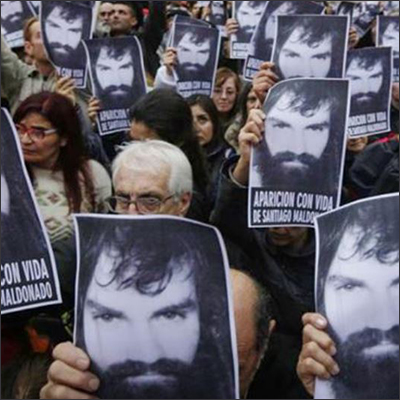
¿Dónde Está Santiago Maldonado?

In Argentina the question on everybody’s lips, and Facebook pages, at the moment is, ‘Where is Santiago Maldonado?’ 2017-09-01 - Santiago MaldonadoThe continued absence of the protester is inevitably evoking references to the ‘Dirty War’ under the military junta from 1976 to 1983, when so many thousands of people ‘disappeared’. Tango was effectively halted during that period both because gatherings were politically dangerous and also because being out late was simply unsafe. But tango and politics are never very far apart in Argentina and the name ‘Maldonado’ was already in the tango canon. In fact there are four songs of that name.
One is a tango composed by Luis Nicolas Visca with lyrics by Luis Rubistein. The Maldonado was a stream in Buenos Aires named for the legend that a woman of that name was abandoned there by the first Spanish governor Pedro de Mendoza in 1536. By the 19th century the stream was in effect an open sewer that flooded Buenos Aires regularly, before emptying into the Rio De La Plata near Palermo. In 1928, the year of this tango, major works commenced to enclose it and re-situate it underground. The song commemorates the unhappy events, the robberies, the murders, the deaths that that would have occurred near the stream as it wound its way through the poorer suburbs of Buenos Aires over nearly 4 centuries of European settlement. Accordingly it is perhaps not surprising that this tango has not been re-recorded since Fresedo (with Fama singing on 7 February ) and Canaro (with Charlo singing) independently recorded it in 1928 in celebration of these significant civil works.

A second tango was also written in 1928, and also recorded by Canaro with Charlo singing–in fact recorded twice by them, at one recording session on 10 December 1929,and at another session on 2 May 1930. The music is by Raúl Joaquin de los Hoyes; the lyrics by Alberto Vacarezza nostalgically portray the Maldonado as the playground of children, a place of safety, and so also as a female confidant to whom the singer returns after he is inevitably dumped by the heartless woman he follows after he commits criminal acts to remain with her. This is 1928 and the lyrics still usually portrayed women as heartless sirens at this time, but I think that this woman may also be a symbol of the heart of  the tango district, centered around Corrientes and Esmeralda and where, by all accounts, the criminal element would congregate also.

Both the music and lyrics of the third one were written by Alberto Mastra, but much later, in 1943. It was also recorded twice, both times in 1943, by Di Sarli with Roberto Rufino singing on 17 December 1943, and by Laurenz with Alberto Podesta singing on 9 December 1943. This one looks back on the earlier, pre-1928, days of Buenos Aires with nostalgia, It is a milonga, and it further evokes connection with rural Argentina by casting the singer as a foreman at La Rural, the Buenos Aires equivalent of the Royal Showgrounds, where produce and stock are brought in to the heart of Palermo from the country for exhibition and sale. The entubation of the Maldonado is a watershed point in this song, a marker of the shift from a nobler past to the present. Given the political events of 1930 and the subsequent and permanent downturn in Argentina’s fortunes, perhaps the songwriter was onto something.

The fourth tango was called ‘El Maldonado’, to differentiate it from the others, perhaps, and it was among around two dozen pieces written by composer and violinist Carlos ‘Hernan’ Macchi (1878-1929). El Maldonado was probably written when the civic works were announced, and so not long before he died at the early age of 51. Unfortunately little is known of it as it was an instrumental tango, without lyrics, and without any extant recordings obvious.

The original entubation was covered over with earth and called Avenida Juan Bautista Justo, after the left-wing and progressive journalist and politician who died in 1928, and which explains the slight bends in that road. The 1928 works finished in 1933-34 and were very effective but there was still some overflow during heavy floods, so further works were undertaken in 2005-2012 to improve the drainage with extra tunneling.

It is to be hoped that there will be no need of a fifth piece of tango music named “Maldonado”.

http://www.thebubble.com/interpol-santiago-maldonado/el-caso-santiago-maldonado-2511124h540/

What is the Role of the Piano in Tango?

2017-08-xx - Daniel Rojas

The piano has been described as the backbone of the tango orquesta, and Dr Daniel Rojas brought his formidable professional skills to this question at a presentation on 12 August 2017.

This edition includes a report on this discussion, recognises El Señor del Tango, and closes with the second part of the discussion of how we learn tango with Sarah Bonnar. That’s Tango Capital, Sunday evening from 7:00pm to 8:00pm:

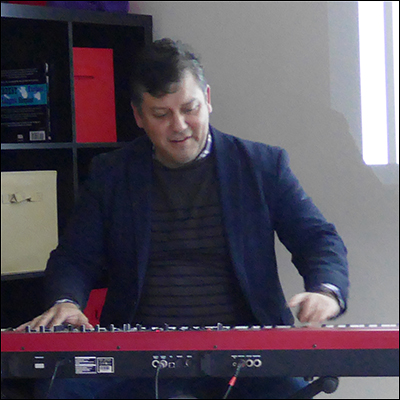
Image: Dr Daniel Rojas explaining a point at the Sydney Tango House on 12 August 2017

PLAYLIST:

  • Chau Pinela, the name a reference to a casual farewell (from lunfardo); it’s a tango recorded by Carlos Di Sarli; on 3 September 1930 music and lyrics by Humberto Castiglioni and sung by Ernesto Famá.
  • La Estancia, the name a reference to a cattle run; it’s a tango recorded by Carlos Di Sarli; on 4 November 1930 music and lyrics by Pintín Castellanos and sung by Ernesto Famá.
  • Flora, the name a reference to a woman’s name; it’s a tango recorded by Carlos Di Sarli; on 4 November 1930 with music composed by Augusto Pedro Berto lyrics by Carlos Keller Sarmiento and sung by Ernesto Famá.
  • Felicia, the name a reference to a woman’s name; it’s a tango recorded by Juan D’Arienzo; on 29 April 1954 with music composed by Enrique Saborido, first recorded in 1927 and lyrics by Carlos Mauricio Pacheco.
  • El Ingeniero, the name a reference to The Engineer, The Architect, or The Builder); it’s a tango recorded by Carlos Di Sarli; on 31 January 1955 with music composed by Alejandro Junnissi, first recorded in 1945.
  • La Yumba, the name a reference to the rasping sound of the bandoneon; it’s a tango recorded by Osvaldo Pugliese; on 13 November 1952 with music composed by Osvaldo Pugliese, first recorded in 1946.
  • Adiós Nonino from the ‘Adiós Nonino’ release in 1991, meaning ‘Farewell, Father’; it’s a concierto recorded by Astor Piazzolla; on ? 1960 with music composed by Astor Piazzolla in October 1960.
  • Este Es El Rey, meaning ‘This Is The King’; it’s a tango recorded by Juan D’Arienzo; on 26 November 1971 with music composed by Carlos Ángel Lázzari, Manuel Antonio Caballero, and Juan Polito.
  • Perfume from the ‘Tango Club’ release in 2002; it’s a tango recorded by Bajofondo; on 2002 music and lyrics by Luciano Supervielle  and sung by  Adriana Varela.

Jorge Durán – the singing

Last edition explored the life of 2017-08-24 - Jorge DuranJorge Durán. This edition will feature his singing with Carlos Di Sarli through both periods, 1945 to early 1947 and from 1956 to 1958 . That’s Tango Capital, Sunday evening from 7:00pm to 8:00pm:

Image Credit: https://todayintango.wordpress.com/category/sun-sign/capricorn/

PLAYLIST:

  • Soy El Cantor De La Orquesta, meaning ‘I Am The Singer Of The Orquestra’; it’s a tango recorded by Carlos Di Sarli; on 23 April 1945 with music composed by Alfredo J Gobbi, lyrics by Osvaldo Antonio Bruzzi ,and sung by Jorge Durán.
  • Tus Labios Me Dirán, meaning ‘Your Lips Will Tell Me’; it’s a tango recorded by Carlos Di Sarli; on 8 March 1945 with music composed by Emilio Brameri, lyrics by Héctor Marcó, and sung by Jorge Durán.
  • Tu Íntimo Secreto, meaning ‘Your Innermost Secrete’; it’s a tango recorded by Carlos Di Sarli; on 30 October 1945 with music composed by Graciano Gómez in 1945 with lyrics by Héctor Marcó, and sung by Jorge Durán.
  • Hoy Al Recordarla, meaning ‘Today Remember’; it’s a tango recorded by Carlos Di Sarli on 31 July 1945, music and lyrics by José Canet and sung by Jorge Durán.
  • Un Tango…Y Nada Más, meaning ‘One Tango…And Nothing More’; it’s a tango recorded by Carlos Di Sarli on 5 July 1945 with music composed by Armando Lacava and Juan Pomati, lyrics by Carlos Waiss ,and sung by Jorge Durán.
  • Vieja Luna, meaning ‘Old Moon’; it’s a tango recorded by Carlos Di Sarli on 4 June 1945, with music composed by Arturo Gallucci, lyrics by Celedonio Flores, and sung by Jorge Durán.
  • Así Era Mi Novia, meaning ‘This Was My Girlfriend’; it’s a tango recorded by Carlos Di Sarli on 31 January 1946, with music composed by Carlos Di Sarli, lyrics by Héctor Marcó, and sung by Jorge Durán.
  • Clavel Del Aire, meaning ‘Carnation Of The Aire’; it’s a tango recorded by Carlos Di Sarli on 6 June 1946, with music composed by Juan de Dios Filiberto in 1930, lyrics by Fernando Silva Valdés, and sung by Jorge Durán.
  • Cosas De Tango, meaning ‘Things Of Tango’; it’s a tango recorded by Carlos Di Sarli on 31 January 1946, with music composed by Tito Ribero and first recorded in 1945, lyrics by Rodolfo M Taboada, and sung by Jorge Durán.
  • A La Luz Del Candil, meaning ‘By The Light Of The Candle’; it’s a tango recorded by Carlos Di Sarli on 27 September 1956, with music composed by Carlos Vicentre Geroni Flores in 1927, lyrics by Julio Plácido Navarinne, and sung by Jorge Durán.
  • Duele Más, meaning ‘It Hurts More’; it’s a tango recorded by Carlos Di Sarli on 19 December 1956, with music composed by Simón Bajour and Rafael Torrado, lyrics by Reinaldo Yiso, and sung by Jorge Durán.
  • Quién Sino Tú, meaning ‘Who Are You?’; it’s a tango recorded by Carlos Di Sarli on 19 December 1956, with music and lyrics by Edmundo Rivero, first recorded in 1955, and sung by Jorge Durán and Roberto Florio.
  • Serenata Mía, meaning ‘My Serenade’; it’s a tango recorded by Carlos Di Sarli on 21 November 1957, music and lyrics by Juan Pablo Marín, and sung by Jorge Durán and Roberto Florio.
  • Lo Que Me Hablaron De Vos, meaning ‘What They Told Me About You’; it’s a tango recorded by Carlos Di Sarli on 25 April 1957, with music composed by Leopoldo Federico, first recorded in 1956, lyrics by Raúl Gramajo, and sung by Jorge Durán.
  • No Me Hablen De Ella, meaning ‘Do Not Talk To Me About Her’; it’s a tango recorded by Carlos Di Sarli on 30 September 1957, with music composed by Tití Rossi and Jorge Moreira, and sung by Jorge Durán.
  • Donde Estas, meaning ‘Where Are You’; it’s a tango recorded by Carlos Di Sarli on 28 August 1958, with music composed by Manuel Sucher and first recorded in 1954, lyrics by Carlos Bahr and sung by Jorge Durán.
  • Buenas Noches, Buenos Aires, meaning ‘Good Night, Buenos Aires’; it’s a tango recorded by Carlos Di Sarli on 16 January 1958, with music composed by Sebastián Piana, lyrics by Osvaldo Sosa Cordero, and sung by Jorge Durán.

How we learn to tango

Maggie Ferg2017-08-17 - Tango Molonglouson and Friends warmed up a cold winter night in Sydney with a hot presentation of a variety of tango at the Camelot Lounge on 6 August 2017. This edition includes a report on Hot Tango In Winter, introduces the voice of Jorge Durán, and finishes up with discussion of how we learn tango with Sarah Bonnar. That’s Tango Capital, Sunday evening from 7:00pm to 8:00pm:

Image: Tango Learning, courtesy of Sarah Bonnar

PLAYLIST:

  • Sueño de Juventud, meaning ‘Dreams of Youth’; it’s a vals recorded by Carlos Di Sarli; on 28 September 1945, music and lyrics by Enrique Santos Discépolo in 1931 and sung by Jorge Durán.
  • Que No Sepan Las Estrellas, meaning ‘They Know Not The Stars!’; it’s a tango recorded by Carlos Di Sarli; on 3 January 2945 with music composed by José Ranieri, lyrics by Alfredo Faustino Roldán and sung by Jorge Durán.
  • Pueblera, meaning ‘Woman from the provinces’; it’s a milonga recorded by Carlos Di Sarli; on 14 January 1947 with music composed by Antonio Bonavena, lyrics by Horacio Sanguinetti and sung by Jorge Durán.
  • Whisky, meaning ‘Whisky’; it’s a tango recorded by Carlos Di Sarli; on 4 October 1957 music and lyrics by Héctor Marcó in 1951 and sung by Jorge Durán.
  • Loca Bohemia from the ‘Loca Bohemia’ release in 2011, meaning ‘Crazy Unconventional’; it’s a concierto recorded by Maggie Ferguson and Tango Oz in 2011 in Buenos Aires; music composed by Francisco De Caro, first recorded in 1928 and lyrics by Francisco Bautista Rímoli.
  • Kicho from the ‘Oda Para Un Hippie’ release in 2005, the name a reference to Piazzolla’s double-bass player, “Kicho” Díaz; it’s a concierto recorded by Helmut Abel and Fortuna Quartett in 2005; music composed by Astor Piazzolla, first recorded in 1970.
  • Historia De Un Amor, meaning ‘Story Of A Love’; it’s a tango recorded by Héctor Varela; on 13 March 1956 music and lyrics by Carlos Eleta Almarán, first recorded in 1955 and sung by Rodolfo Lesica.
  • El Lloron from the ‘Classical Tango Argentino’ release in 1972, meaning ‘The Weeper (meaning “one who cries”)’; it’s a milonga recorded by Hugo Diaz; in 1972 with music composed by Juan Félix Maglio in 1933 and lyrics by Enrique Cadícamo.
  • Desde El Alma, meaning ‘From The Soul’; it’s a tango recorded by Osvaldo Pugliese; on 26 December 1985 with music composed by Rosita Melo, first recorded in 1927 and lyrics by Victor Piuma Vélez and Homero Manzi.