

 And picking up on the Canyengue theme established last week, this week’s edition is devoted to a range of canyengue music from Canaro, Lomuto, Firpo, and Orquesta Típica Victor, as well as modern productions from La Tubatango and Cuarteto Guardia Vieja. That’s Tango Capital, 7:00pm to 8:00pm
- broadcasting on 2xxfm 98.3 in Canberra
- streaming to the web at http://www.2xxfm.org.au/listen
Image: Myk Dowling leads a demonstration dance for the canyengue workshop at Buenos Aires In The Southern Highlands (BASH 2016) last weekend.
PLAYLIST:
- No Hay Que Hacerse Mala Sangre, meaning ‘There’s No Need For Bad Blood’, a canyengue recorded by Francisco Canaro, on 20 March 1935, with music composed by Francisco Canaro, with lyrics by Ivo Pelay, and sung by Roberto Maida.
- Alma de Bandoneón, meaning ‘Soul Of The Bandoneón’, a canyengue recorded by Francisco Canaro, on 20 March 1935, with music composed by Enrique Santos Discépolo in 1935, with lyrics by Enrique Santos Discépolo & Luis César Amadori, and sung by Roberto Maida.
- Noches de Buenos Aires, meaning ‘Nights Of Buenos Aires’, a canyengue recorded by Francisco Canaro, on 23 April 1935, with music composed by Alberto Soifer in 1935, with lyrics by Manuel Romero, and sung by Roberto Maida.
- Oi, Malevo, meaning ‘Hey, Ruffian’, a canyengue recorded by Roberto Firpo, on 12 December 1929, with music composed by Juan José Buscaglia.
- Falsa Alegria, meaning ‘False Joy’, a canyengue recorded by Roberto Firpo, on 8 May 1929.
- Organito Del Suburbio, meaning ‘Suburban Organ-player’, a canyengue recorded by Roberto Firpo, on 26 June 1929, with music composed by Antonio Bonavena, with lyrics by Roberto Fermin Torres, and sung by Teófilo Ibáñez.
- El Pardo Cejas, meaning ‘Brown Eyebrows’, a canyengue recorded by La Tubatango in 2006, with music composed by Prudencio Aragón and lyrics by Antonio Polito.
- El Flete, meaning ‘The Racehorse’, a canyengue recorded by La Tubatango in 2006, with music composed by Vicente Greco in 1916, with lyrics by Gerónimo Gradito.
- La Morocha, meaning ‘The Brunette’, a canyengue recorded by La Tubatango in 2006, with music composed by Enrique Saborido in 1905, with lyrics by Ángel Villoldo.
- Filo Misho, a canyengue recorded by Orquesta Típica Victor, on 8 May 1930.
- Recuerdo, meaning ‘A Memory’, a canyengue recorded by Orquesta Típica Victor, on 23 April 1930, with music composed by Osvaldo Pugliese in 1924, with lyrics by Eduardo Moreno, and sung by Roberto Diaz.
- El Chamuyo, meaning ‘The Chattering’, a canyengue recorded by Orquesta Típica Victor in 1930.
- 9 de Julio, meaning ‘9th of July’ (a national day of independence), a canyengue recorded by Cuarteto Guardia Vieja in 2005, with music composed by José Luis Padula, with lyrics by Lito Bayardo.
- Re Fa Si, a canyengue recorded by Cuarteto Guardia Vieja in 2005, with music composed by Enrique Delfino.
- Jueves, meaning ‘Thursday’, a canyengue recorded by Cuarteto Guardia Vieja in 2005, with music composed by Rafael Rossi & Udelino Toranzo.
- Intimas, meaning ‘Intimate’, a canyengue recorded by Francisco Lomuto, on 11 August 1944, with music composed by Alfonso Lacueva, with lyrics by Ricardo Luis Brignolo, and sung by Carlos Galarce.
- Desagravio, meaning ‘Grief’, a canyengue recorded by Francisco Lomuto, on 13 December 1944, with music composed by Francisco Lomuto, with lyrics by Homero Manzi & José María Contursi, and sung by Alberto Rivera.
- Mano a Mano, meaning ‘Hand By Hand’, a canyengue recorded by Francisco Lomuto, on 11 August 1944, with music composed by Carlos Gardel & José Razzano in 1923, with lyrics by Celedonio Flores, and sung by Alberto Rivera.
 It’s BASH weekend, and picking up on the Canyengue workshop being presented there, the theme for the next two weeks is … Canyengue. This week, a look at the dance and its evolution, followed by the second part of the interview with
  2xxfm has been experiencing a series of equipment failures and technical issues, unfortunately due to a variety of causes, including service failures from external providers such as Telstra. Practical steps are being taken to resolve the issues completely, including re-negotiating a new service agreement for streaming with a new provider, complete replacement of obsolete software, replacement of supporting infrastructure such as servers.You will understand that this takes time to do properly and that there can be interim issues as new systems are integrated with existing ones.
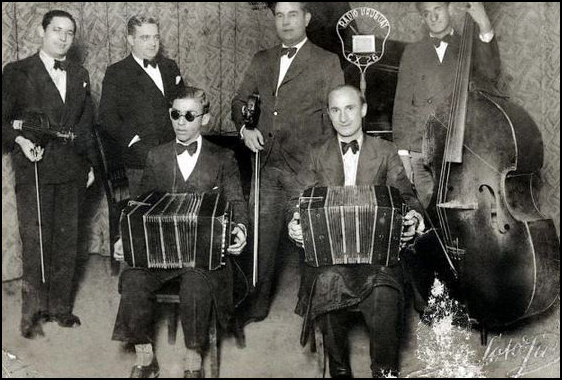
 view of
  To those listening on the internet stream, I do apologise for the technical problem that arose on the weekend. The program did not stream and accordingly I am making this edition of the podcast available freely so that listeners can hear the majority of the content.
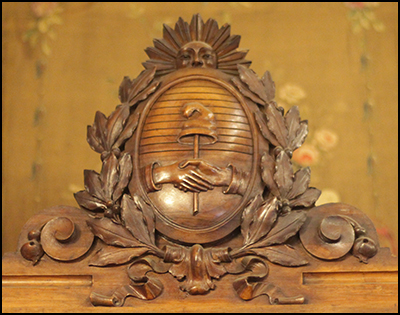 a to the capital, Buenos Aires that had started with independence and federation a century earlier. Change is always threatening to someone, and one reaction was the reification of rural Argentina and denigration of urban Buenos Aires as morally inferior to the traditions of the country. The milonga became associated with the noble rural lifestyle, epitomised by the mythologised gaucho, whilst the tango was identified with the sinful city – although to avoid confusion I should at this point note that the legend of the brothel origins of tango has been comprehensively debunked.
 Tango Capital